
Your home’s flower beds are the first thing visitors notice. Empty or poorly designed beds make your house feel unfinished and uninviting. Strategic flower bed design transforms your entire property instantly. The right plants, layout, and design create professional curb appeal without expensive renovations.
These 25 flower bed ideas cover front yards, backyard spaces, sides of houses, and specific design challenges. Each idea includes practical guidance helping you execute the design successfully. Whether you want low-maintenance perennials or colorful seasonal displays, you will find inspiration here. Your flower beds will finally reflect the care you put into your home.
🏠 1. Formal Symmetrical Design For Elegant Front Yards
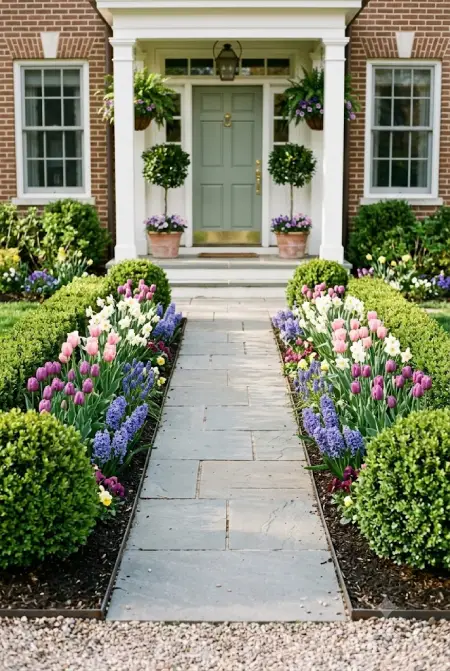
Create matching flower beds on both sides of your front entrance. Symmetry creates professional, polished appearance. Mirror identical plants creating visual balance. This approach works beautifully for colonial or traditional homes.
Plant boxwood shrubs anchoring corners. Add spring bulbs (tulips, daffodils) for seasonal color. Layer with summer annuals (impatiens, salvias) creating depth. Maintain clean edges using bricks or edging materials. The symmetry instantly elevates your home’s appearance.
🌾 2. Layered Cottage Garden For Charming Appeal
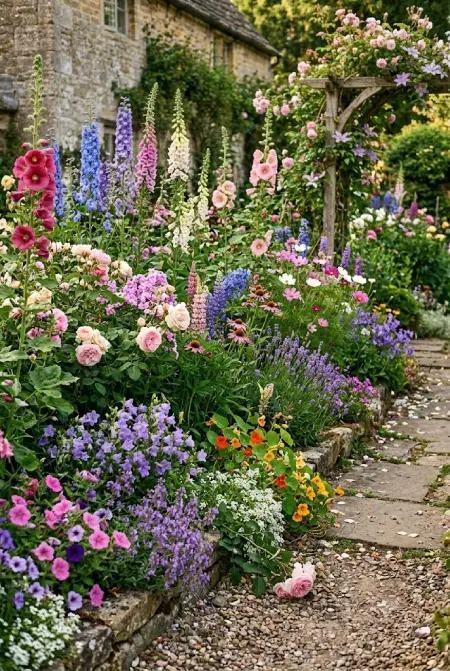
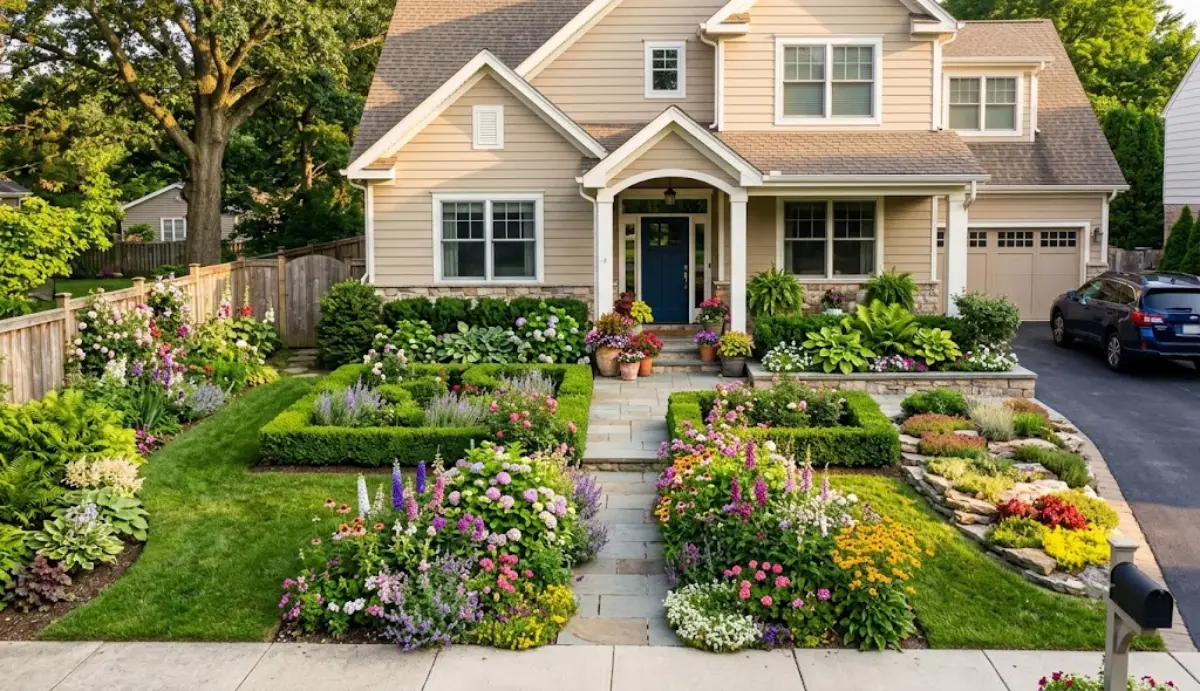
Create abundant, overflowing flower beds using varied heights and textures. Layer tall delphiniums and foxgloves at back. Add medium cosmos and coneflowers in middle. Position trailing petunias and alyssum at front edges.
Mix perennials and annuals creating season-long blooms. Allow plants to slightly overlap pathways creating romantic, lived-in feel. Choose complementary colors rather than strict color schemes. The cottage aesthetic feels warmly welcoming.
🌿 3. Evergreen Foundation For Year-Round Interest
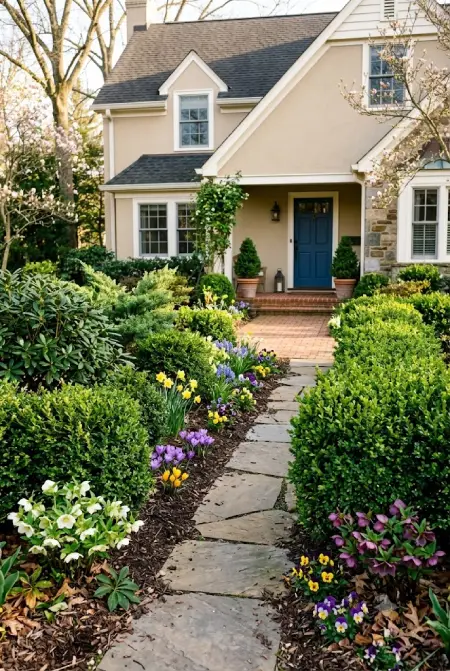
Use evergreen shrubs creating permanent structure. Add seasonal flowers changing with the seasons. Plant dwarf boxwoods and junipers anchoring the beds. Underplant with hellebores blooming in late winter.
In spring, add tulips and daffodils. Summer brings marigolds and petunias. Fall features mums and ornamental kale. Winter returns to evergreen structure. This approach ensures curb appeal every month of the year.
🎨 4. Monochromatic Color Strategy For Sophistication
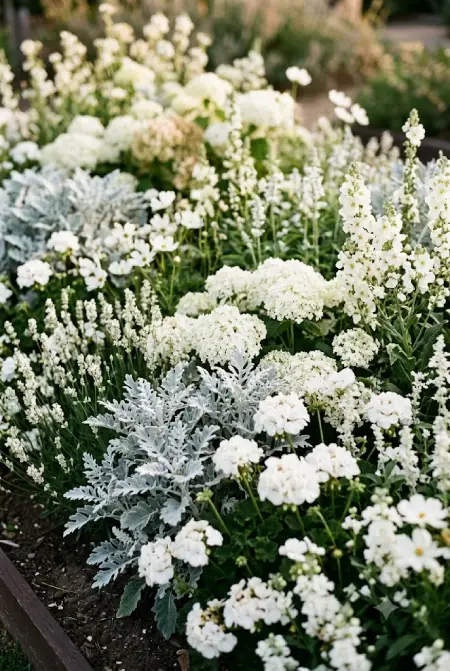
Choose single color theme (white, purple, or pink) and build around varying shades. White theme uses white peonies, white cosmos, white lilies with silver dusty miller foliage.
Plant similar height whites creating cohesion. The monochromatic approach creates high-end, intentional aesthetic. Single color focus removes visual clutter appearing more sophisticated.
🌞 5. Native Plant Strategy For Low-Maintenance Beauty
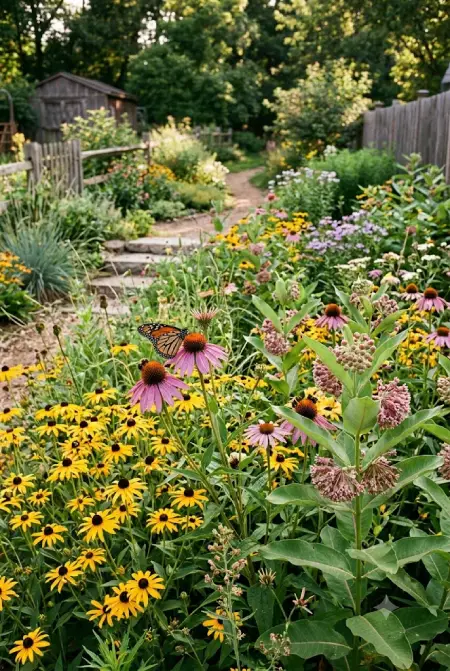
Select native plants thriving in your region’s natural conditions. Native plants require less water, fertilizer, and maintenance than non-natives. Black-eyed Susans, purple coneflowers, and butterfly milkweed flourish naturally.
Native plantings support local pollinators (bees, butterflies, birds). The ecological benefit aligns with environmental values. Natural vigor of native plants means fewer problems and easier care for busy homeowners.
🌺 6. Tropical-Themed Design For Vacation Vibes
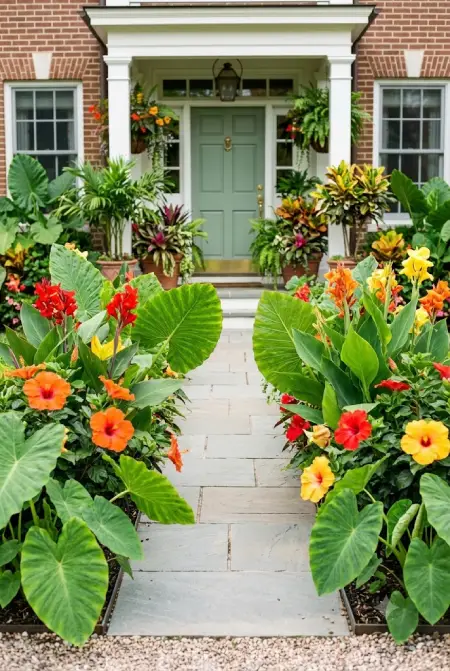
Create exotic feel using bold foliage and bright blooms. Canna lilies with large leaves and colorful flowers create tropical drama. Combine with hibiscus, bird of paradise, and elephant ear plants.
The lush, dramatic aesthetic transforms ordinary yards into vacation settings. Tropical designs work in warm climates where these plants survive outdoors year-round. In cooler regions, treat as summer annuals replanting each season.
🐝 7. Pollinator-Friendly Planting For Ecological Value
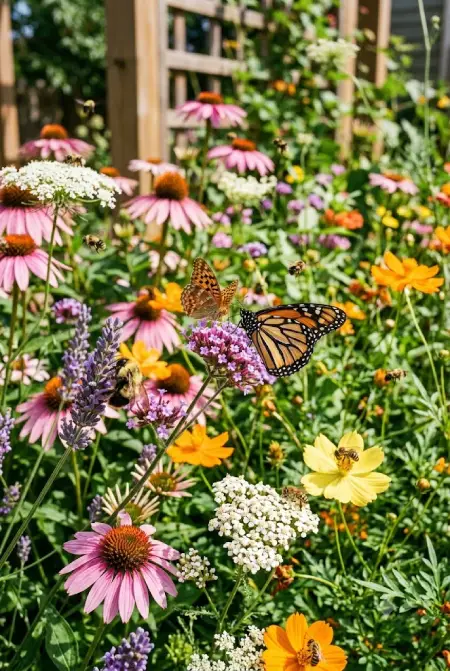
Design beds specifically attracting bees, butterflies, and hummingbirds. Include native flowers (coneflowers, bee balm, black-eyed Susans). Add flowering herbs (lavender, sage, thyme).
Avoid pesticides allowing natural pest control. The pollinator activity creates dynamic garden feeling. Watching butterflies and bees visit your flowers provides genuine joy and purpose beyond aesthetics.
📍 8. Color-Blocked Design For Bold Modern Appeal
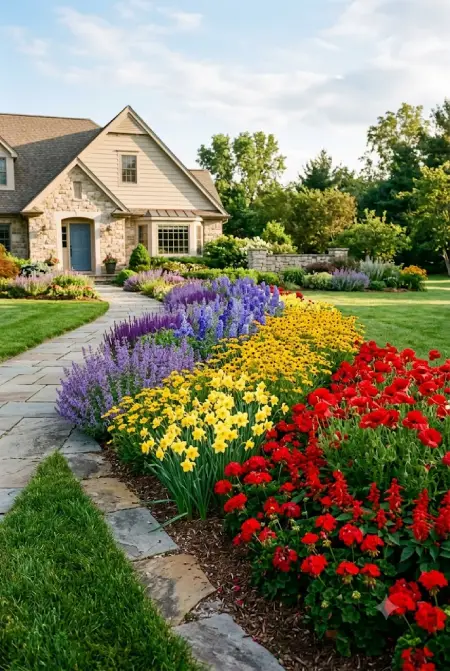
Divide flower bed into zones featuring single dominant colors. Red zone with geraniums and red salvias. Yellow zone with marigolds and coreopsis. Blue/purple zone with petunias and blue salvia.
Color-blocking creates striking visual impact. The organized approach suits modern architectural homes. Bold color combinations photograph beautifully and create memorable curb appeal.
🌙 9. Shade-Tolerant Design For Difficult Light Areas
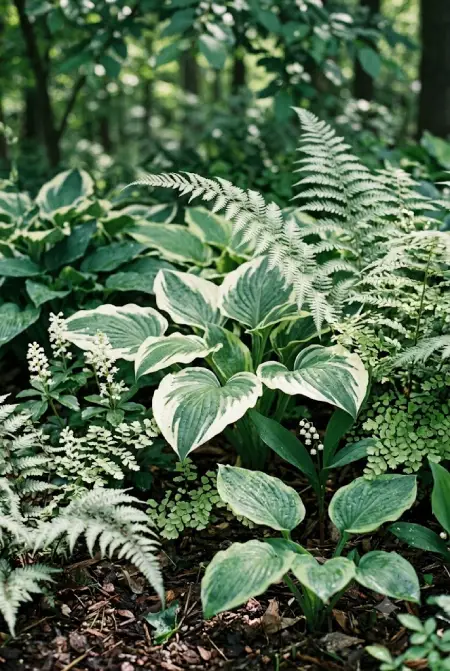
If your front bed receives limited sunlight, select shade-loving plants. Hostas with variegated foliage provide texture and interest. Astilbe produces feathery flowers in pink, red, or white. Ferns add elegant, airy feel.
Shade beds actually look lush and peaceful. The cooler color palette (whites, light pinks, variegated greens) creates serene aesthetic. Shade prevents plant stress from intense summer heat.
🌹 10. Fragrant Flower Design For Sensory Welcome
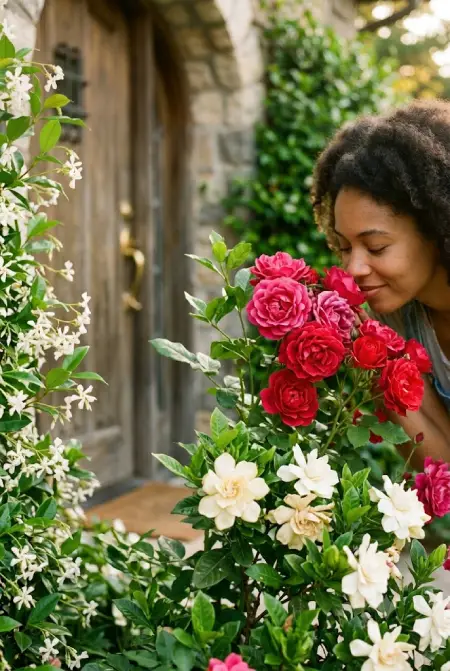
Plant heavily scented flowers near entryways and pathways. Gardenias with creamy, sweet fragrance. Roses providing classic elegance. Jasmine climbing nearby. Sweet alyssum and dianthus near seating areas.
Fragrance creates welcoming, memorable impression. Visitors remember scent experiences. Aromatic plants transform front beds into multisensory experience enriching daily entry and exit.
🪨 11. Rock Garden Design For Drought Tolerance
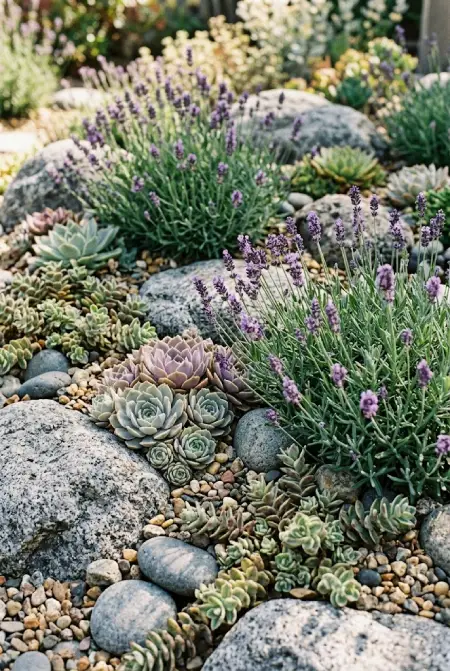
Combine rocks, gravel, and drought-tolerant plants creating water-wise landscape. Sedum, ice plant, and lavender thrive in this setup. Grey-toned rocks complement silvery-leaved plants.
Rock gardens require minimal watering after establishment. The textured aesthetic suits contemporary or modern homes. Boulders and gravel create architectural interest without frequent maintenance.
⬜ 12. Minimalist Modern Design With Clean Lines
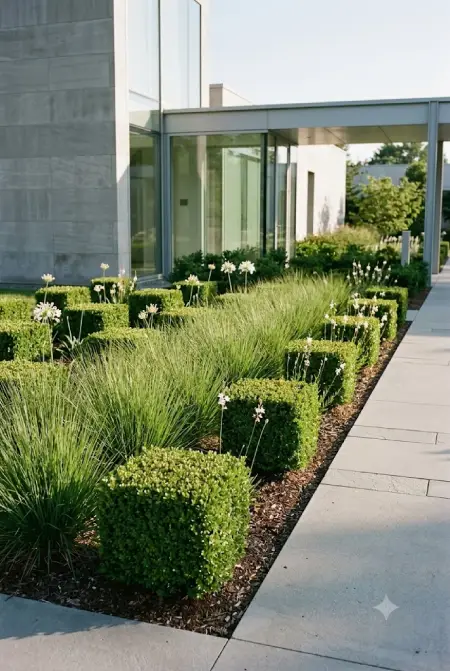
Use geometric shapes, restrained color palette, and architectural plants. Boxwood cubes provide structured form. Fountain grass adds movement. White flowers (lilies, alliums) provide clean focal points.
Minimalist designs suit contemporary architecture. Clean lines and open space feel purposeful and calm. Less-is-more philosophy creates sophisticated appearance.
📈 13. Raised Bed Design For Definition and Accessibility
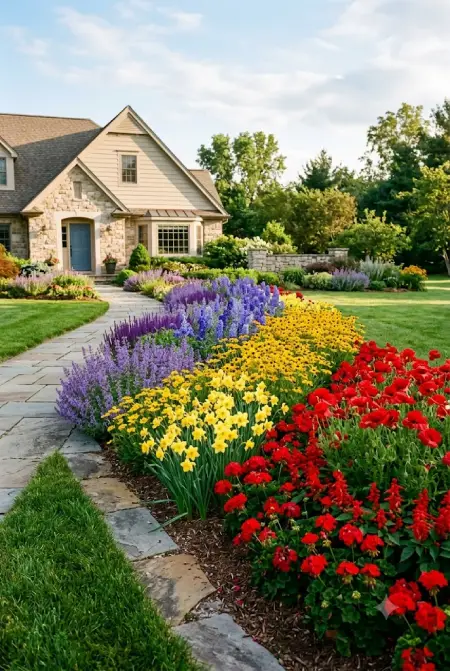
Build raised beds from wood, brick, or stone creating physical definition. Raised beds lift flowers to eye level increasing visual impact. The elevated design improves drainage and creates neat appearance.
Flowers at raised bed height feel more prominent and easier to photograph. The defined border creates intentional, finished appearance. Raised beds work especially well for uneven terrain or small spaces.
🧚 14. Whimsical Fairy-Tale Design For Imagination
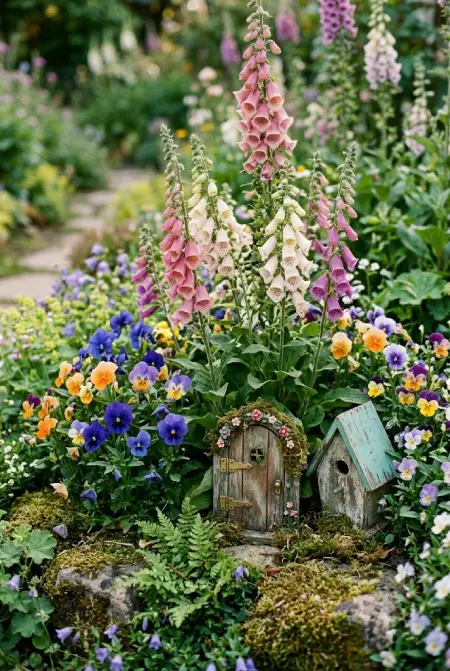
Create magical, storybook-like beds with unexpected elements. Foxgloves and columbines provide tall, delicate blooms. Pansies with expressive faces add whimsy. Small birdhouses or fairy doors create story elements.
Whimsical designs encourage imagination and wonder. Children love exploring beds designed like magical gardens. Adult visitors appreciate the playful, thoughtful approach.
🌿 15. Edible Flower Bed For Beauty and Function
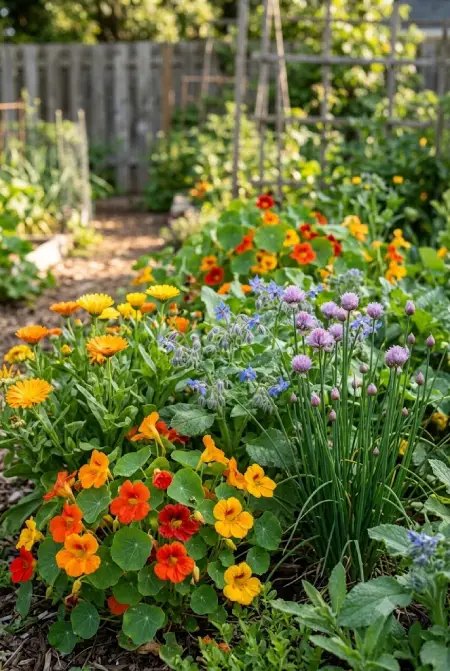
Combine ornamental and edible plants. Nasturtiums with peppery flavor and bold color. Calendula used in teas. Borage with light cucumber flavor. Chive blossoms adding purple interest.
Edible flowers blend beauty with functionality. Harvesting for cooking creates interactive experience. The beds produce visual beauty and culinary ingredients simultaneously.
🌹 16. Rose Garden Design For Classic Elegance
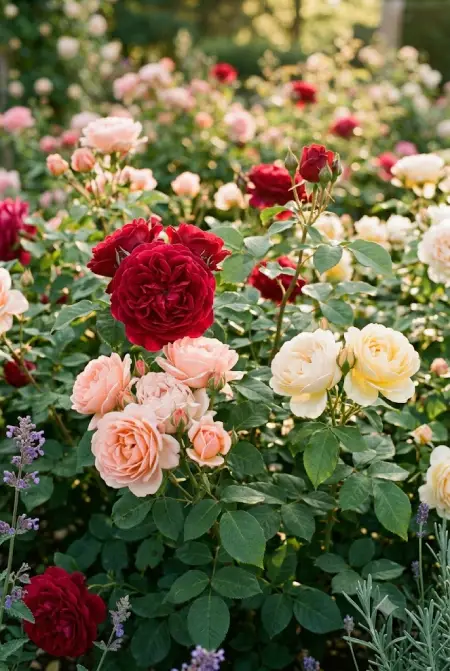
Plant hybrid tea roses, shrub roses, and climbing varieties creating romantic display. David Austin English roses provide fragrance and full blooms. Knock Out roses offer low-maintenance reliability.
Roses symbolize elegance and romance. The lush blooms create dramatic focal point. Proper spacing and care ensure healthy growth and abundant flowering.
🦋 17. Butterfly Garden For Dynamic Movement
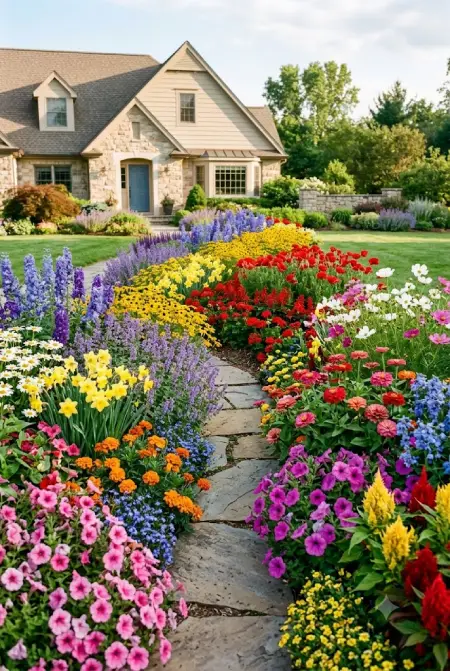
Plant nectar-rich flowers attracting butterflies. Butterfly bush with large fragrant blooms. Zinnias providing flat landing surfaces. Lantana with multi-colored clusters. Asters for late-season migration.
Butterfly activity creates dynamic, living garden. Watching butterflies visit flowers brings genuine joy. The movement and color create constant visual interest even on static summer days.
☮️ 18. Zen-Inspired Design For Peaceful Aesthetics
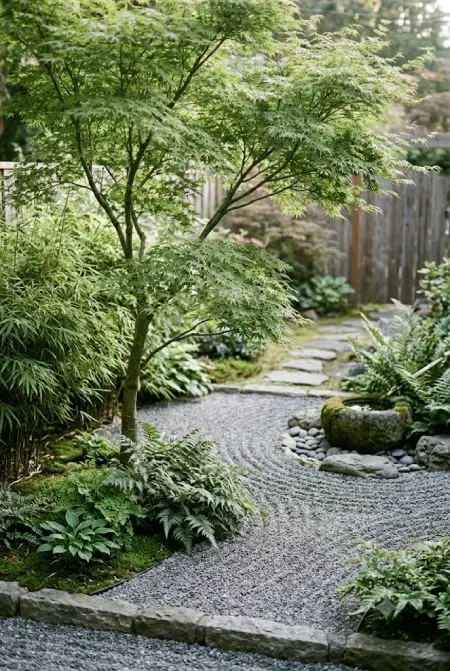
Create calm, meditative space using restrained palette and natural elements. Japanese maple trees providing structure. Bamboo (clumping variety) adding vertical interest. Raked gravel beds creating peaceful patterns.
Zen gardens prioritize simplicity and contemplation. The minimal approach reduces visual noise. Rocks and raked gravel create visual interest without requiring frequent maintenance.
🎨 19. Colorful Annual Design For Quick Seasonal Color
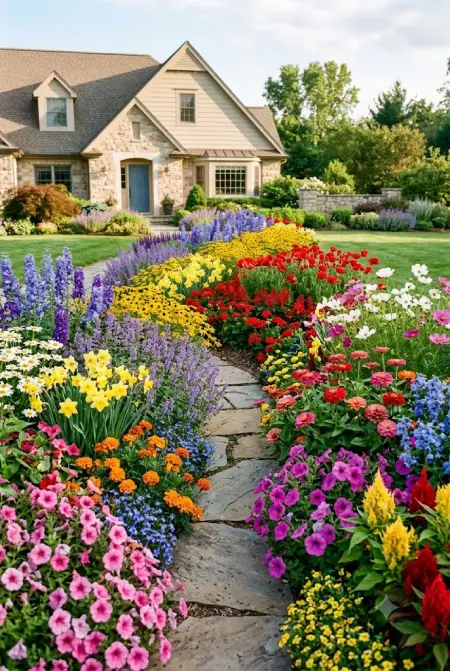
Use annual flowers for vibrant, quick-impact color. Geraniums providing large blooms. Petunias available in nearly every color. Impatiens perfect for shaded areas. Marigolds for bright yellows and oranges.
Annuals produce continuous blooms throughout season. The variety of available colors allows seasonal theme changes. Replace beds seasonally keeping design fresh and exciting.
🌾 20. Wildflower Meadow Design For Natural Beauty
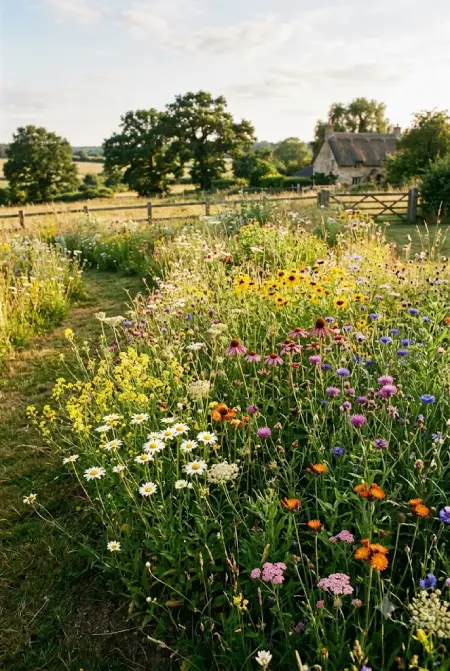
Create naturalized beds mimicking wildflower meadows. Coreopsis yellow daisy-like flowers. Blue flax with delicate blooms. Black-eyed Susans and Indian blanket wildflowers.
Wildflower meadows appear natural and effortless. Once established, they require minimal maintenance. The rustic charm suits country and boho home styles. Wildflower seeds create budget-friendly approach.
🚧 21. Front Fence Line Design For Softened Boundaries
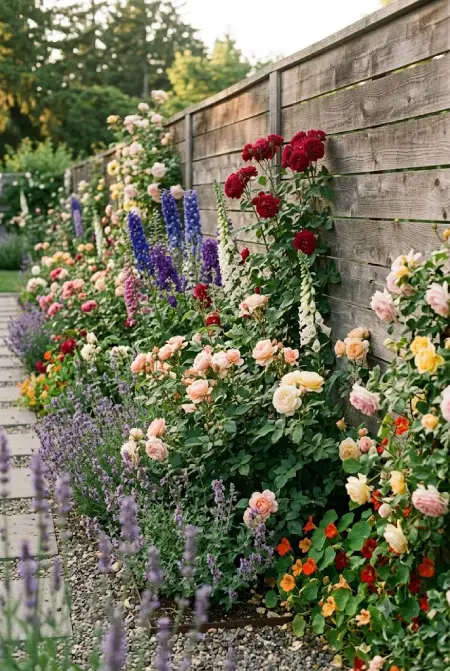
Plant flowers along fence creating softened boundary. Tall flowers (hollyhocks, sunflowers) provide backdrop. Medium flowers (daisies, phlox) fill middle. Trailing varieties soften fence base.
Fence-line planting adds vertical interest and privacy. The flowers humanize hard fence lines. Flowering barrier creates transition between public and private spaces.
🛤️ 22. Pathway Border Design Creating Garden Flow
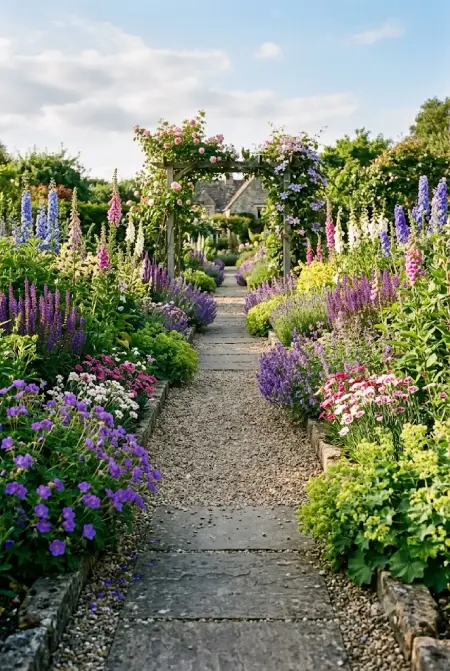
Flank walkways with parallel flower beds guiding visitors. Plant upright varieties (daylilies, dianthus) preventing sprawl into pathways. Occasional trailing plants soften edges.
Pathway borders create intentional flow and welcoming navigation. Symmetrical borders create formal feel. Varied heights create visual interest while maintaining open walkway.
⛰️ 23. Tiered or Sloped Design For Uneven Terrain
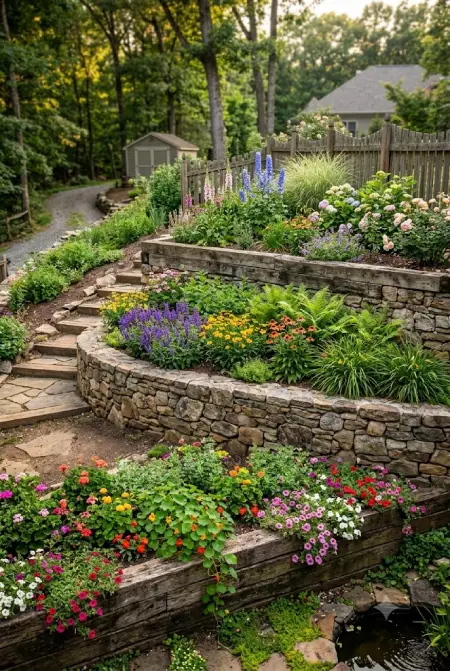
Build retaining walls creating tiered planting zones on sloped yards. Upper tier with ornamental grasses and coneflowers. Middle tier with lavender and Shasta daisies. Lower tier with creeping thyme and alyssum.
Tiered design transforms challenging slopes into assets. Multiple levels create visual drama. The stepped approach makes maintenance accessible without excessive bending.
🏡 24. Porch Container Design For Space Limitations
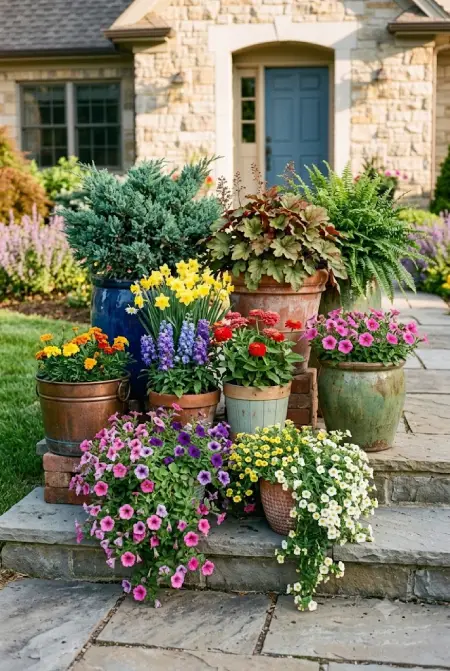
Group containers of varying heights near entryway creating visual composition. Large hydrangeas in back containers. Medium geraniums in middle. Trailing million bells in front cascading over edges.
Container gardens work in smallest spaces. Flexible design allows seasonal updates. Grouped containers create focal point without taking ground space. Perfect for apartment patios or tiny yards.
🌸 25. Side-of-House Shade Solution For Neglected Spaces

Transform shaded side yards with hostas, ferns, and shade-tolerant bloomers. Impatiens provide delicate color. Astilbe creates feathery texture. Liriope offers green and purple interest.
Side yards often receive neglected landscaping. Strategic shade planting transforms these spaces into garden features. Shade-tolerant plants create lush appearance requiring less maintenance than sun-tolerant varieties.
🛠️ Quick Practical Guide
Design principles for successful flower beds:
- Odd numbers of plants (3, 5, 7) create natural aesthetic
- Vary heights planting tall at back, short at front
- Plant in drifts of 3+ same plants creating impact
- Layer for continuous blooms (spring bulbs, summer annuals, fall mums)
- Mix textures (feathery, bold, delicate) creating interest
- Use repeating plants creating design cohesion
- Leave negative space preventing overcrowding
Flower bed sizing for curb appeal:
- Front beds minimum 3-4 feet deep for visual impact
- Width should relate to home architecture
- Large homes need larger, bolder beds
- Small homes suit intimate, detailed beds
- Wider beds accommodate more varied plantings
- Depth allows layering for sophisticated appearance
Plant selection strategies:
- Choose plants thriving in existing light conditions
- Mix perennials (returning yearly) with annuals (seasonal color)
- Select plants with varied bloom times for season-long interest
- Consider foliage color when blooms fade
- Include evergreens providing winter interest
- Choose deer-resistant plants in wildlife areas
- Select disease-resistant varieties reducing problems
Maintenance schedules:
- Spring — refresh soil, plant annuals, stake perennials
- Summer — deadhead regularly, water consistently, monitor pests
- Fall — plant bulbs, cut back perennials, plant cool-season annuals
- Winter — mulch protect roots, limit watering, plan next season
- Year-round — weed weekly, monitor for problems, fertilize as needed
Budget-friendly flower bed options:
- Start with foundation evergreens ($30-50 per plant)
- Add spring bulbs in bulk ($10-20 per dozen)
- Use inexpensive annuals ($1-3 per plant) for color
- Collect free mulch from tree trimming services
- Divide existing plants creating free new plants
- Propagate cuttings expanding garden affordably
- Create from seed starting spring annuals ($1-5 per packet)
Curb appeal impact assessment:
- Visible from road at normal driving speed
- Frames entryway creating welcoming first impression
- Coordinates with home exterior colors
- Shows intentional design rather than random planting
- Demonstrates home maintenance and care
- Creates stronger property value perception
- Photographs well for real estate or social media
Seasonal color progression:
- Spring — tulips, daffodils, pansies, primrose
- Summer — petunias, zinnias, impatiens, marigolds
- Fall — mums, asters, ornamental kale, sedum
- Winter — evergreens, hellebores, ornamental grasses, pansies
Common mistakes to avoid:
- Planting too densely creating crowding and disease
- Using only one height creating flat appearance
- Neglecting drainage causing root rot
- Ignoring light requirements stressing plants
- Overcomplicated designs requiring excessive maintenance
- Using poor-quality soil limiting plant success
- Planting annuals only skipping spring bulbs
- Ignoring existing landscape style creating visual discord
Edging options for defined appearance:
- Brick edging — classic look, medium durability
- Steel or aluminum — modern look, excellent durability
- Plastic edging — affordable, works until brittles
- Stone edging — natural look, excellent durability
- Wood edging — rustic look, regular replacement needed
- No edging — natural look, beds spread into lawns
Soil preparation importance:
- Add 2-3 inches quality compost annually
- Test soil for pH and nutrient levels
- Amend clay soil with compost improving drainage
- Amend sandy soil with compost improving retention
- Till soil 8-12 inches deep before planting
- Remove existing grass and weeds thoroughly
- Fresh soil setup prevents future problems
Watering best practices:
- Water early morning reducing disease
- Water at soil level avoiding foliage
- Deep watering less frequently beats frequent shallow watering
- Mulch 2-3 inches reduces water needs
- Newly planted flowers need consistent moisture
- Established perennials tolerate some drought
- Container plantings need more frequent watering