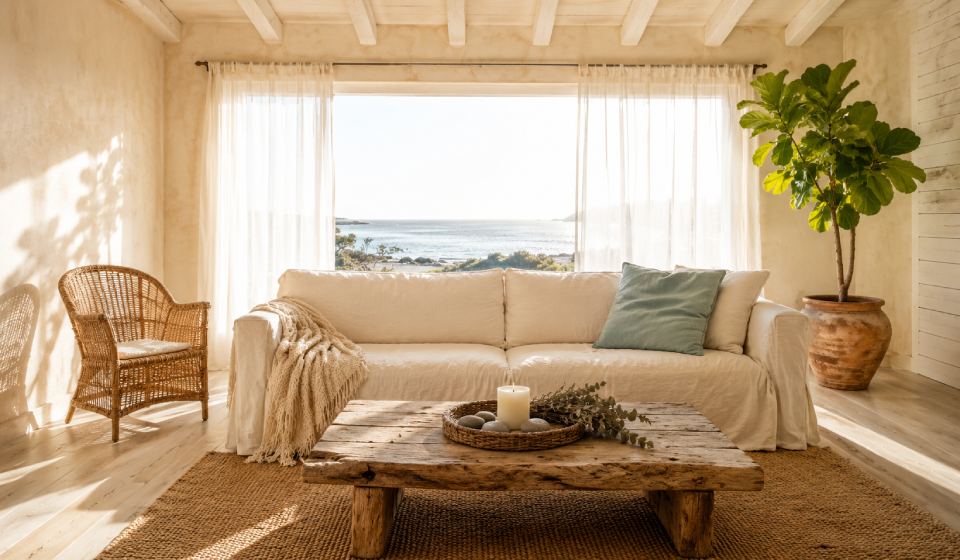

A coastal casual living room is all about ease. It feels light, open, and comfortable. You don’t need to live near the beach to get this look.
You just need the right colors, textures, and furniture choices.
This guide covers 20 simple and practical ideas. Each one helps you build a living room that feels breezy, warm, and genuinely relaxing.
1. Start with Warm Neutral Walls
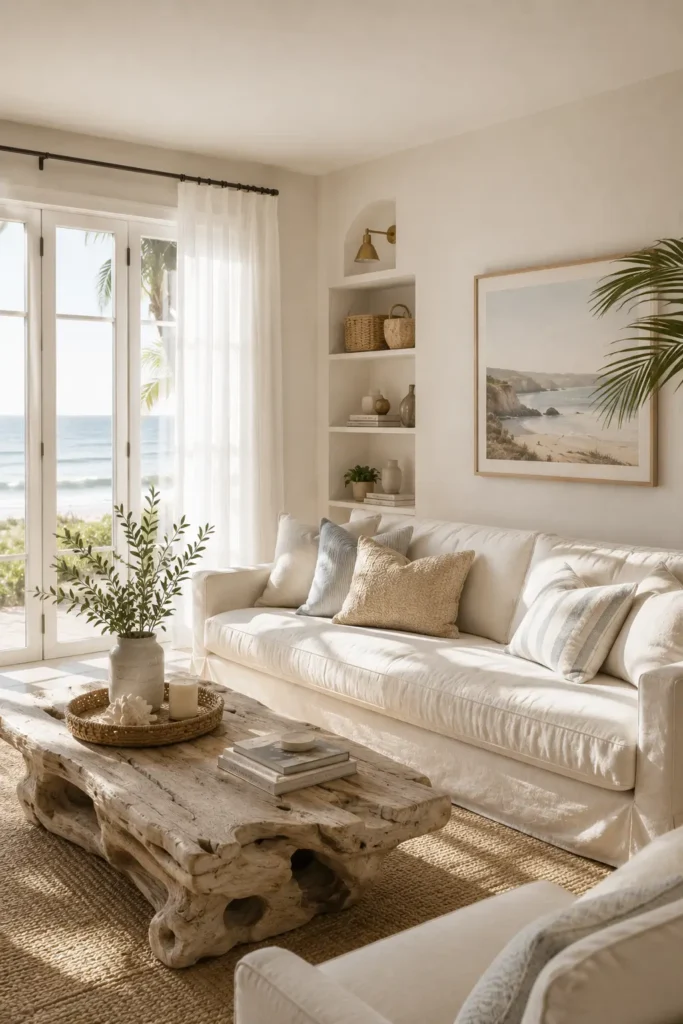
The walls set the tone for everything else in the room. Soft, warm neutrals are the best starting point for a coastal casual living room.
- Choose colors like warm white, ivory, sand, or pale driftwood grey
- These shades make the room feel open and airy without being stark
- Matte or eggshell finishes work better than gloss — they absorb light softly
- Warm whites feel cozier than cool whites, which can look too clinical
- If you have a grey couch, sandy or warm greige walls complement it perfectly
It’s the simplest change with the biggest impact.
2. Pick the Right Sofa
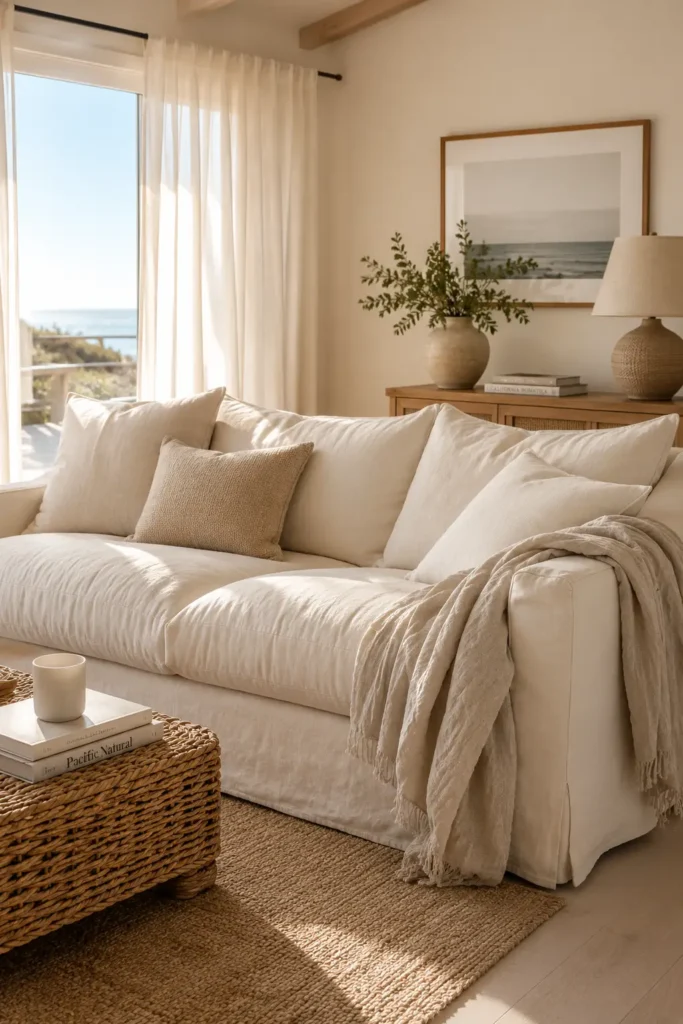
The sofa is the most important piece in the room. In a coastal casual living room, comfort always comes first.
- Slipcovered sofas in white or cream are the most popular choice — they’re relaxed, washable, and get better with age
- Deep seat cushions make the sofa feel genuinely comfortable, not just good-looking
- A grey couch works well here — just add warm textures like jute, rattan, and linen to stop it feeling cold
- A leather couch in tan or warm white gives a California casual coastal feel
- Avoid stiff, formal sofa shapes — rolled arms and loose cushions suit the style best
Arrange the seating toward a natural focal point like a window, fireplace, or piece of art.
3. Lay Down a Natural Fiber Rug
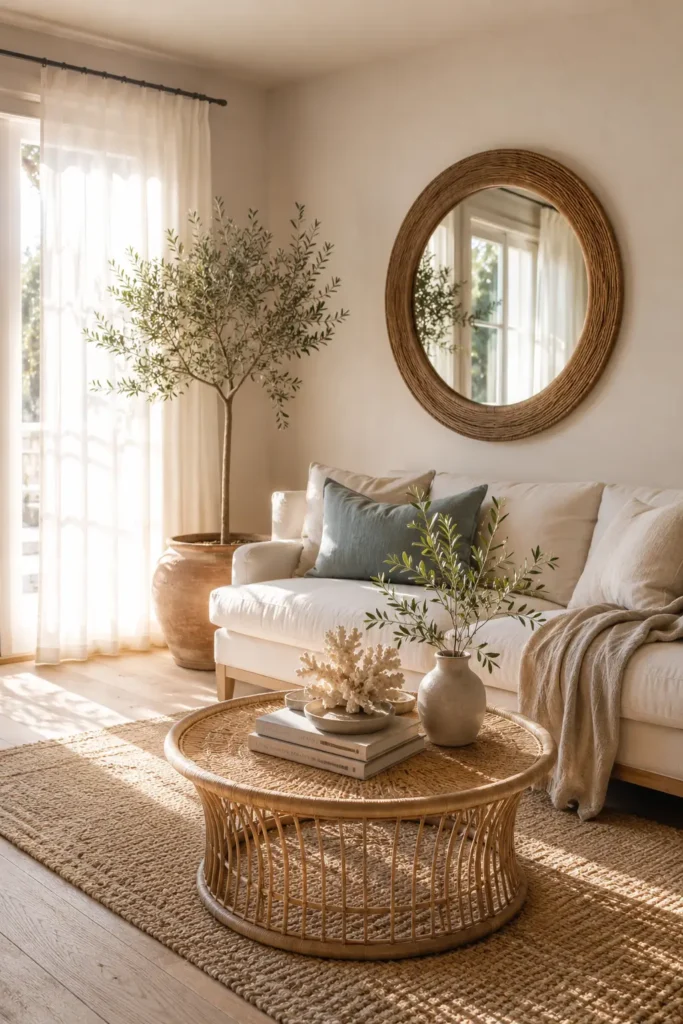
A rug grounds the room and adds texture underfoot. In a coastal casual living room, natural fiber rugs are the best choice.
- Jute and sisal rugs are the most authentic — their rough, natural texture echoes beach grasses
- Go bigger than you think — all main furniture should sit on or at least touch the rug
- Layer a smaller soft rug on top of a jute base for extra comfort and visual interest
- Light natural tones keep the floor from breaking up the open, airy feel of the room
- Avoid dark or heavy patterned rugs — they work against the breezy quality of the style
A large natural rug ties the whole room together.
It’s one of the easiest ways to make a coastal casual living room feel complete.
4. Use Sheer and Light Window Treatments
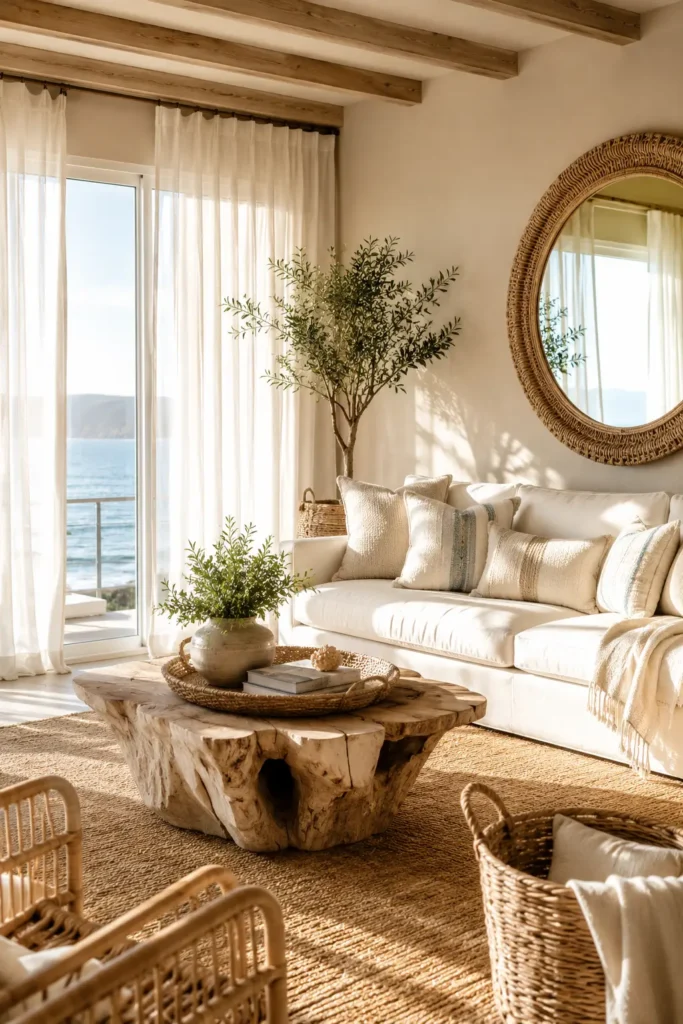
Natural light is one of the most important elements in a coastal casual living room. The wrong window treatments can kill it instantly.
- Sheer linen or cotton panels let light through while softening the window — they’re the ideal coastal choice
- Bamboo blinds filter sunlight beautifully and add a natural texture to the window itself
- Avoid heavy drapes or blackout curtains in main living areas — they make the room feel closed off
- Leave windows completely bare if privacy isn’t a concern — nothing lets in more light
- In rooms with less natural light, place a large mirror across from the window to bounce light further into the space
The goal is to let the room feel as bright and open as possible during the day.
5. Add Weathered and Reclaimed Wood
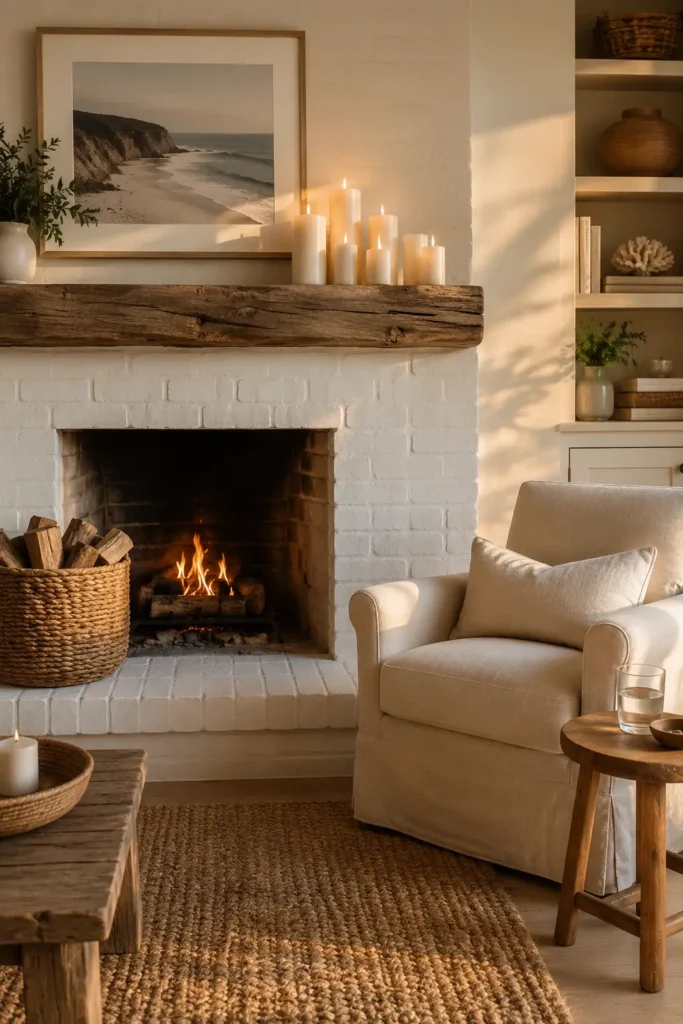
Weathered wood brings warmth and a natural, sun-bleached quality to the room. It’s one of the most essential materials in coastal casual design.
- Look for driftwood coffee tables, whitewashed pine shelves, or reclaimed oak side tables
- The finish matters — whitewashed, bleached, or lightly oiled wood looks coastal; dark stain does not
- In a coastal casual living room with a fireplace, a reclaimed wood mantel is one of the most impactful additions
- Mix wood tones slightly — small variations feel collected and natural, not showroom-coordinated
- Even small pieces make a difference — a driftwood tray, a reclaimed shelf, or a wooden candle holder all add to the story
Weathered wood adds the kind of warmth that no paint color or fabric can fully replicate.
6. Bring in Rattan and Cane Furniture
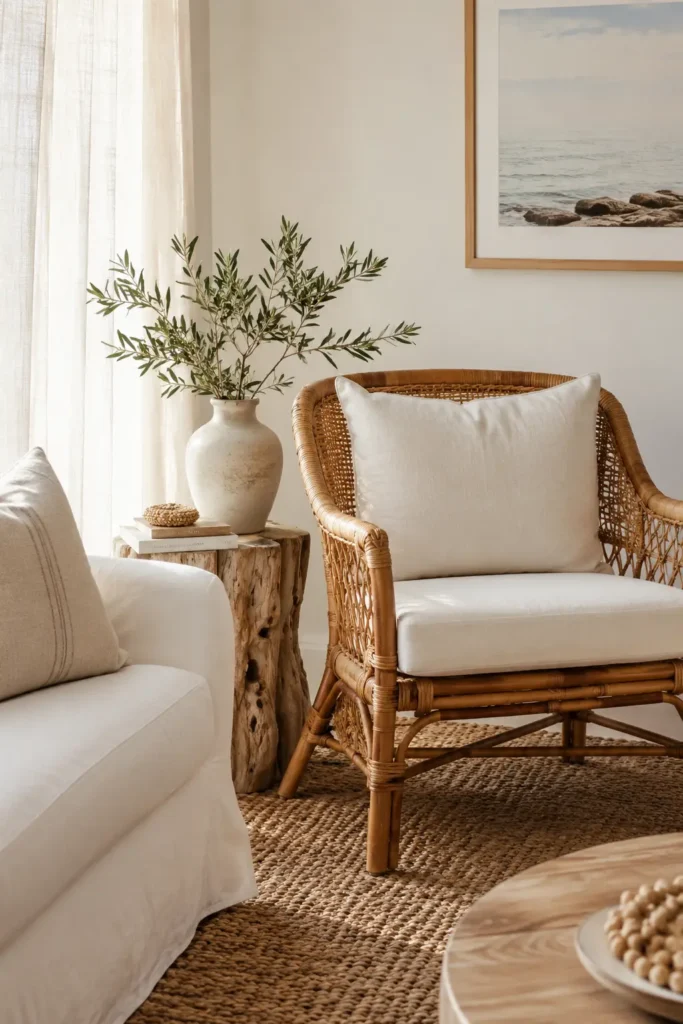
Rattan and cane are the most recognizable materials in coastal casual interiors. They’re lightweight, airy, and add that easy, sun-warmed quality the style is known for.
- A rattan accent chair beside the sofa adds texture and a relaxed, casual feel
- Rattan coffee tables and side tables keep the room from feeling visually heavy
- In a small coastal casual living room, rattan works especially well — its open structure creates less visual bulk than solid wood
- Cane-paneled cabinets add coastal texture while providing practical storage
- Mix rattan with linen, jute, and weathered wood — not chrome or high-gloss finishes
One rattan piece can change the entire feel of a room. It’s a simple addition with a big visual payoff.
7. Use Soft Blues as Accent Colors
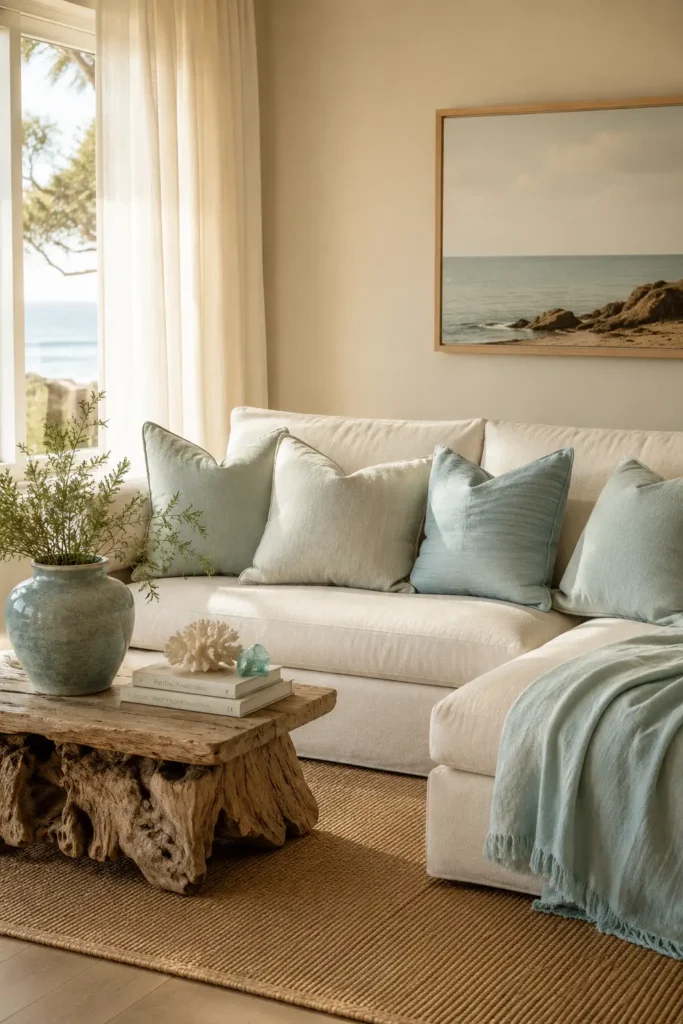
Blue is the color most associated with coastal living. Used the right way, it makes a room feel calm and connected to the sea.
- Use soft blue, aqua, seafoam, and muted sage as accent colors — not wall colors
- Carry the blue through cushions, throws, ceramic vases, and small artwork
- Dusty, faded tones of blue work better than bright or electric shades — they feel naturally sun-bleached
- Layer two or three different blues together for depth without loudness
- Keep the main palette neutral — the blue should feel like an accent, not a dominant color
A coastal casual living room in blue works best when the blue is supporting the room, not taking it over.
8. Style with Woven Baskets
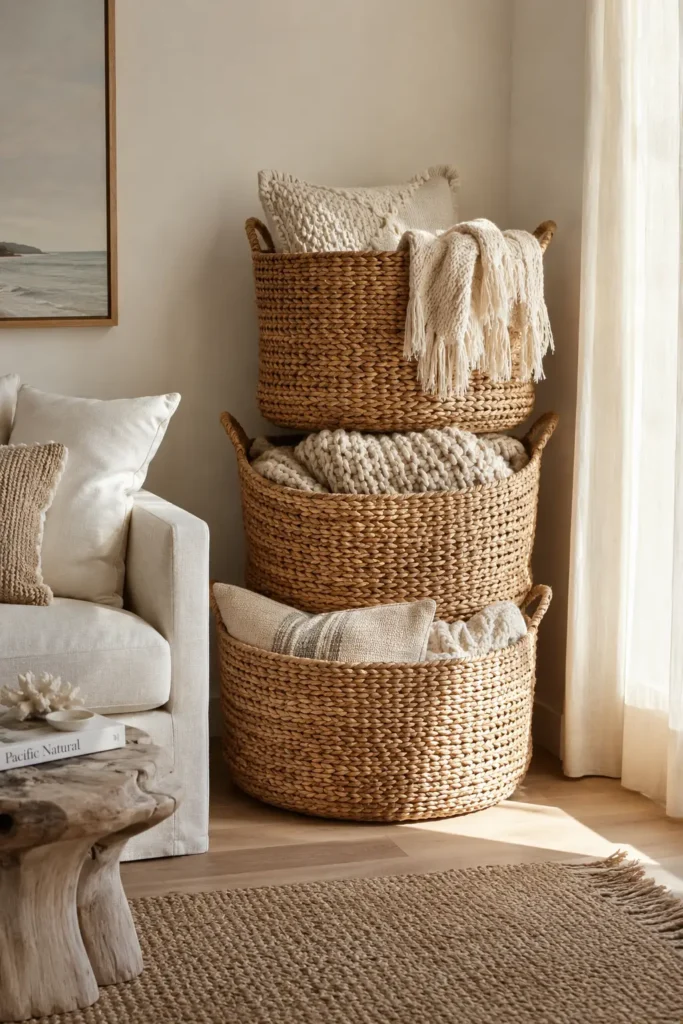
Baskets are one of the most practical and decorative elements in a coastal casual living room. They add texture and help keep the room tidy at the same time.
- Seagrass, rattan, and cane baskets all work beautifully — choose tight weaves for a cleaner look
- Use large floor baskets beside the sofa to store throws and blankets
- Stack two or three baskets in graduating sizes in a corner for an easy, sculptural arrangement
- In a coastal casual living room with a fireplace, a woven basket of firewood beside the hearth looks genuinely atmospheric
- Hang flat woven baskets on the wall as art — a cluster of three in varying sizes adds coastal texture to a blank wall
Baskets do double duty in this style — they’re storage and decor in one.
9. Add White Shiplap or Limewashed Walls
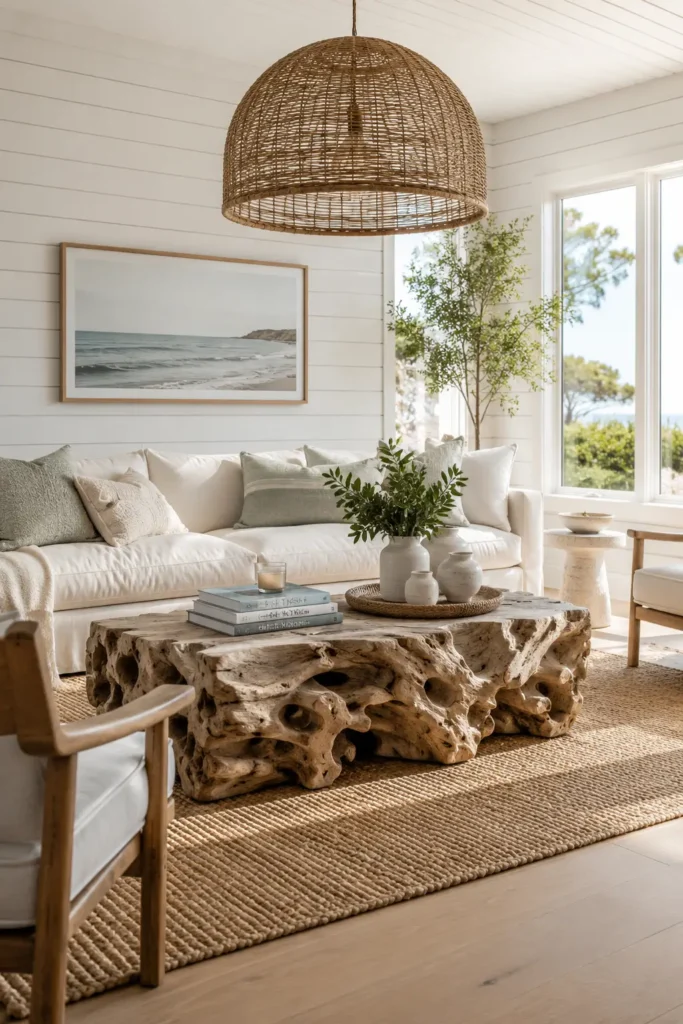
Wall treatments add architectural interest that paint alone can’t achieve. In coastal casual interiors, shiplap and limewash are both popular choices.
- White shiplap on a single feature wall behind the sofa adds depth and a genuinely coastal quality
- Horizontal shiplap lines draw the eye across the room and make narrow rooms feel wider
- Limewashed walls create a softer, more organic texture — they’re slightly warmer and less structured than shiplap
- In a small coastal casual living room, textured walls reflect more light than flat paint and prevent small spaces from feeling flat
- Pair shiplap with simple, unfussy trim — coastal casual design favors clean lines
Even one shiplap wall transforms a room. It adds character that feels permanent and intentional.
10. Layer Lightweight Textiles
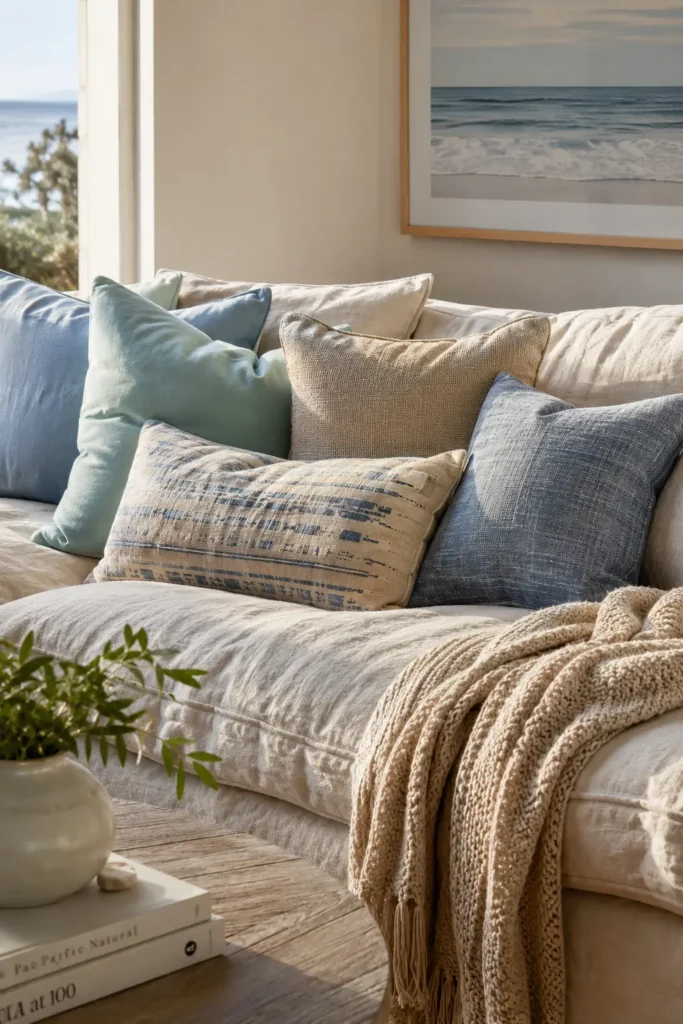
Textiles are how a coastal casual living room achieves its tactile warmth. The right fabrics make a room feel genuinely cozy without looking heavy.
- Linen and cotton are the primary coastal casual fabrics — breathable, naturally textured, and they improve with washing
- Layer cushions in coordinating coastal tones — soft blue, sandy cream, faded aqua — in different sizes
- Drape a light knit throw loosely over the sofa arm — fold it casually, not precisely
- Sheer linen curtains add movement when windows are open — the way fabric moves in a breeze is one of the most genuinely coastal things a room can do
- Avoid velvet, faux fur, or heavy woven textiles — they don’t belong in this style
The textiles should feel effortless. Wrinkled linen looks better here than perfectly pressed fabric.
11. Hang Coastal Artwork
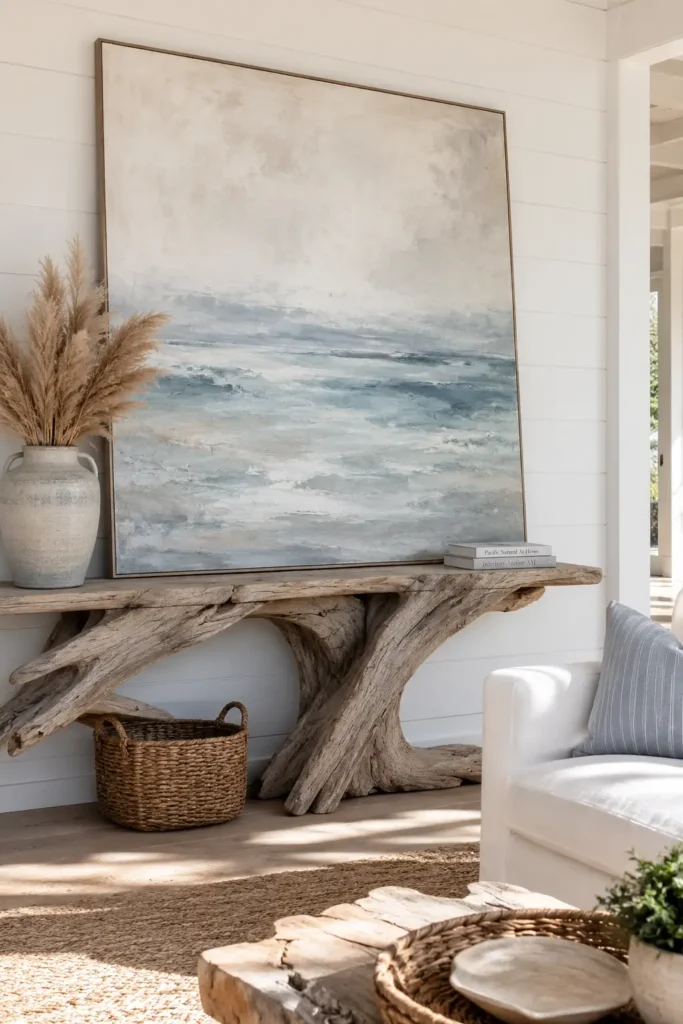
Artwork sets the visual tone of the room faster than almost anything else. In a coastal casual living room, what you choose and how you hang it matters.
- One large coastal painting or photograph makes more impact than several small ones competing for attention
- Loose, painterly artwork in soft blues, sandy neutrals, and warm whites feels more authentic than highly detailed prints
- A gallery wall of simple framed coastal prints — shells, botanicals, seascapes — works well in coastal boho or coastal farmhouse style rooms
- Hang artwork slightly lower than standard gallery height — it feels more casual and relaxed
- Lean larger pieces against the wall rather than hanging them for an effortless, collected quality
Art should feel like it belongs in the room, not like it was chosen to match the cushions.
12. Get the Lighting Right
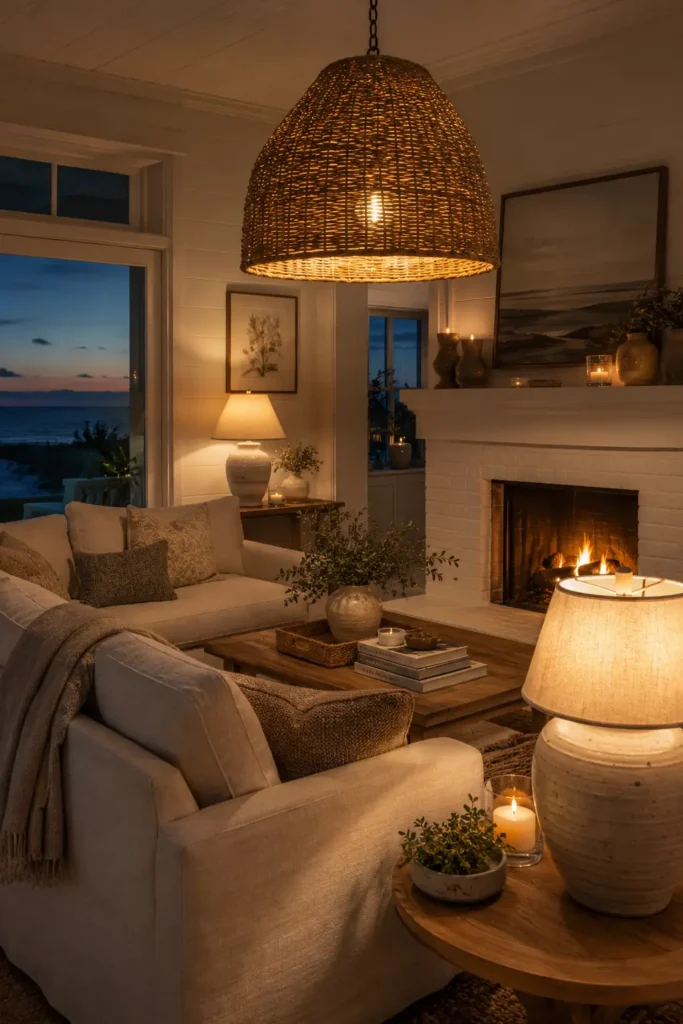
Good lighting makes a coastal casual living room feel warm and inviting at any time of day. Overhead lighting alone is never enough.
- A woven rattan or seagrass pendant light above the seating area adds natural texture and casts warm, diffused light
- Ceramic table lamps with linen shades on side tables create warm pools of light in the evening
- Floor lamps in natural wood or rattan frames work well in corners that overhead lighting doesn’t reach
- In a coastal casual living room with a fireplace, let the firelight be the main evening light source — keep electrical lighting warm and low
- Use warm LED bulbs at 2700K — cool white bulbs work against the warm, relaxed quality of the style
Layered lighting is what makes a room feel atmospheric rather than just bright.
13. Add Living Plants
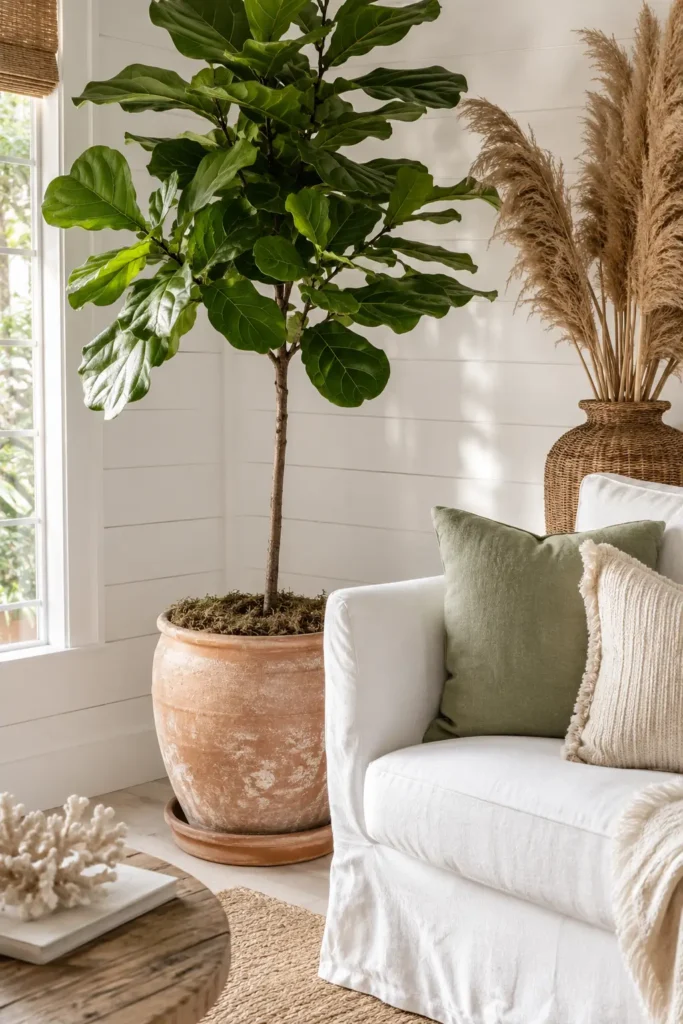
Plants bring life and a connection to nature that’s central to coastal casual design. The right choices reinforce the natural, breezy quality of the style.
- Good plant choices include fiddle leaf figs, birds of paradise, trailing pothos, and large-leafed tropical varieties
- Dried pampas grass in a tall ceramic or rattan vase adds movement and texture without any maintenance
- Use terracotta, ceramic, or woven planter covers — the containers matter as much as the plant itself
- One large plant in the corner of the room adds more impact than several small ones scattered around
- Group smaller plants together on a shelf or coffee table — groupings look more intentional than individual pots placed randomly
A single large plant can change the entire energy of a room. It makes the space feel alive.
14. Decorate with Natural Coastal Objects
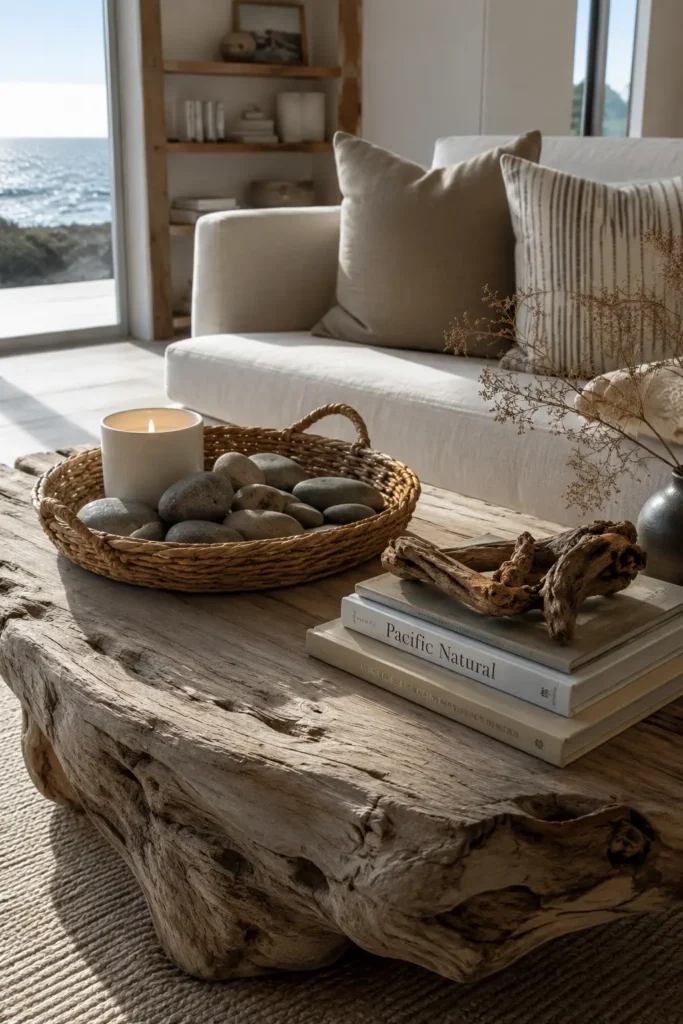
The best coastal casual living rooms feel like they were furnished by someone who actually lives near the water — not someone who bought a theme kit.
- Use driftwood pieces, smooth river stones, coral replicas, and large shells very sparingly
- One or two natural objects styled on a tray reads as collected. Ten spread across every surface reads as overdone
- A simple tray on the coffee table with a few smooth stones, a small driftwood piece, and a candle creates a cohesive vignette
- Choose faux coral rather than real — real coral harvesting is environmentally harmful
- Vary the height of objects in a grouping — different heights create more visual interest than objects of the same scale
Less is always more with coastal objects. Curate carefully rather than accumulating freely.
15. Design a Small Coastal Casual Living Room
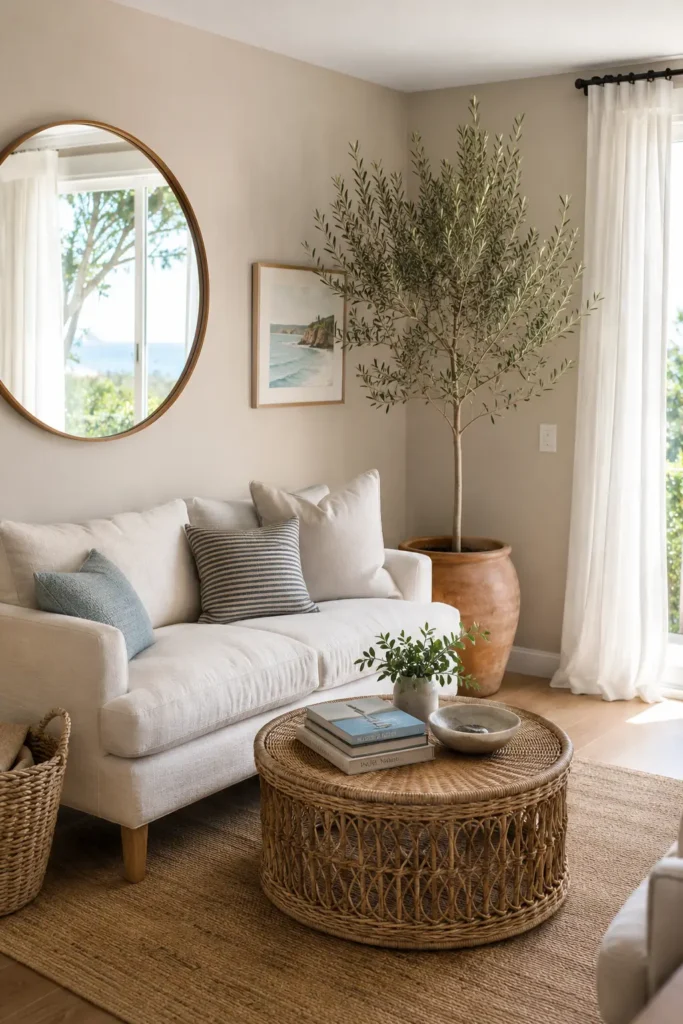
Small rooms benefit enormously from coastal casual design. The light palette and natural materials make rooms feel bigger naturally — but a few specific choices help even more.
- Keep furniture count low — one sofa, one accent chair, one coffee table is usually enough
- Choose furniture with visible legs — the gap underneath creates airiness and makes the floor look larger
- Use one large mirror on the main wall opposite a window — it doubles the perceived size of the room
- A single soft blue or aqua on one accent wall adds color depth without closing the room in
- Use one generously sized rug rather than a small one — a rug that’s too small makes a small room feel more cramped, not less
In a small space, every choice matters more. Keep it simple and let each piece do its job.
16. Style a Coastal Casual Living Room with a Fireplace
A fireplace gives a coastal casual living room a beautiful focal point. Styling it well makes it the warmest and most inviting spot in the home.
- Keep the mantel simple — a few objects of varying heights, one piece of coastal art leaning above, and one natural element like driftwood or a small plant
- White-painted brick or whitewashed stone is the most coastal-compatible fireplace finish
- A large bleached or whitewashed wood mantel brings the most authentic coastal farmhouse quality to the space
- Fill the hearth in warmer months with a cluster of white pillar candles in different heights
- A woven basket of firewood beside the fireplace is both practical and deeply atmospheric
A well-styled fireplace makes the rest of the room feel pulled together instantly.
17. Create a Coastal Boho Living Room
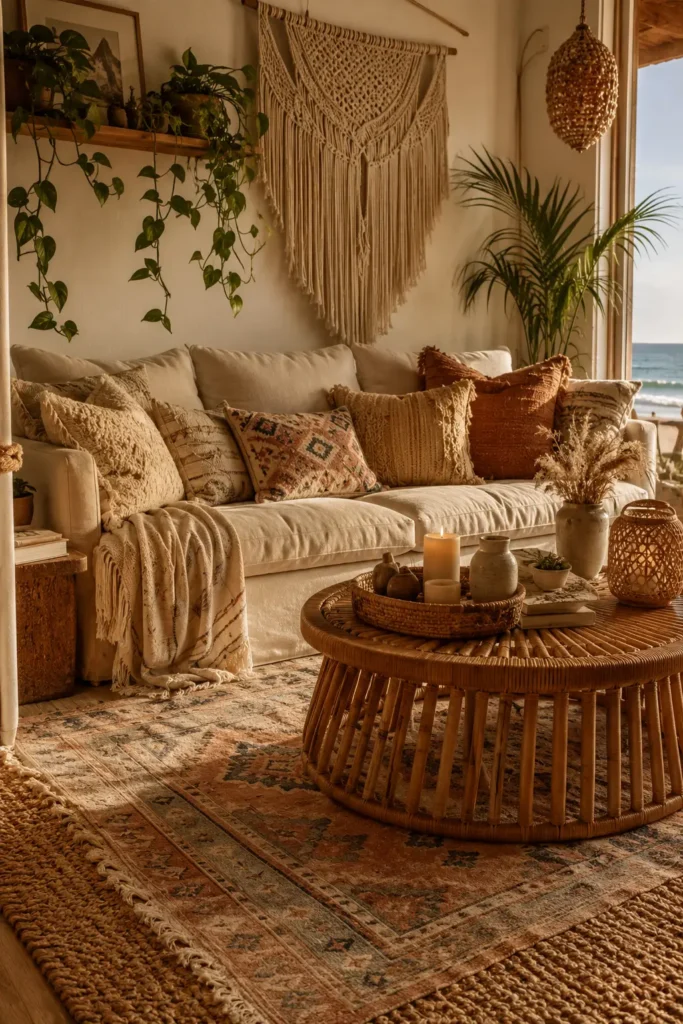
Coastal boho blends the relaxed coastal palette with the layered, collected quality of bohemian design. It’s warmer, more textural, and more personal than pure coastal casual.
- Add woven wall hangings or macramé alongside coastal artwork for a layered, eclectic quality
- Layer multiple rugs — a large jute base with a smaller patterned flatweave on top
- Mix ceramic, rattan, driftwood, and woven materials freely — coastal boho welcomes more variety
- Incorporate plants more generously — trailing pothos, large tropical leaves, and dried botanicals all add to the abundant feel
- Add warm amber and terracotta tones alongside coastal blues and neutrals — they warm up the palette and distinguish the coastal boho look from cooler coastal styles
Coastal boho is the most personal and layered version of the style. It rewards collecting over time.
18. Build a California Casual Coastal Living Room
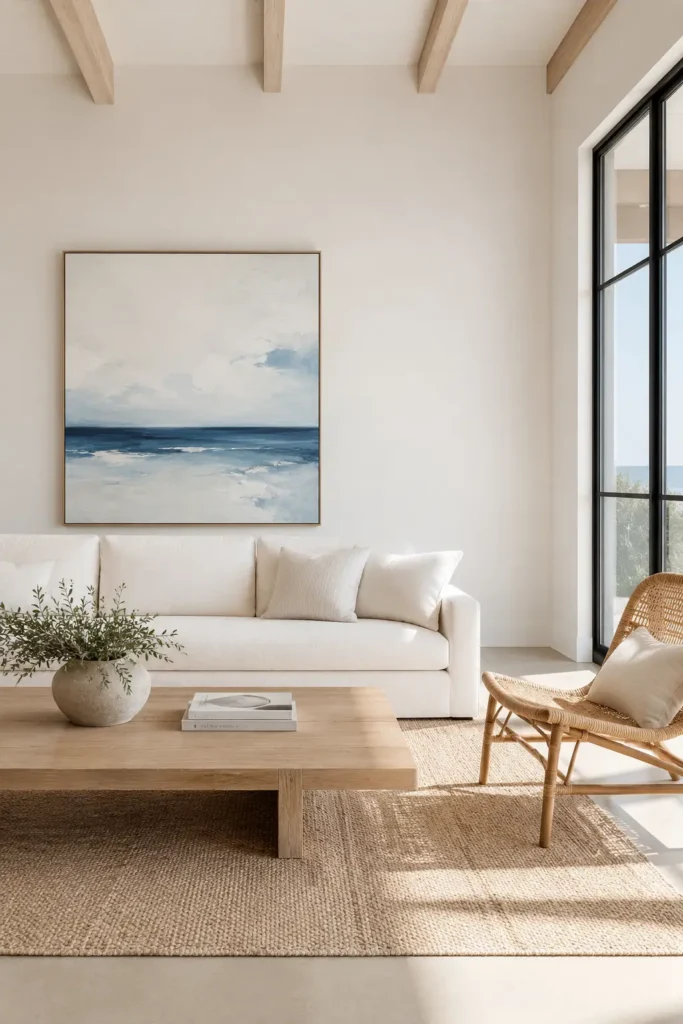
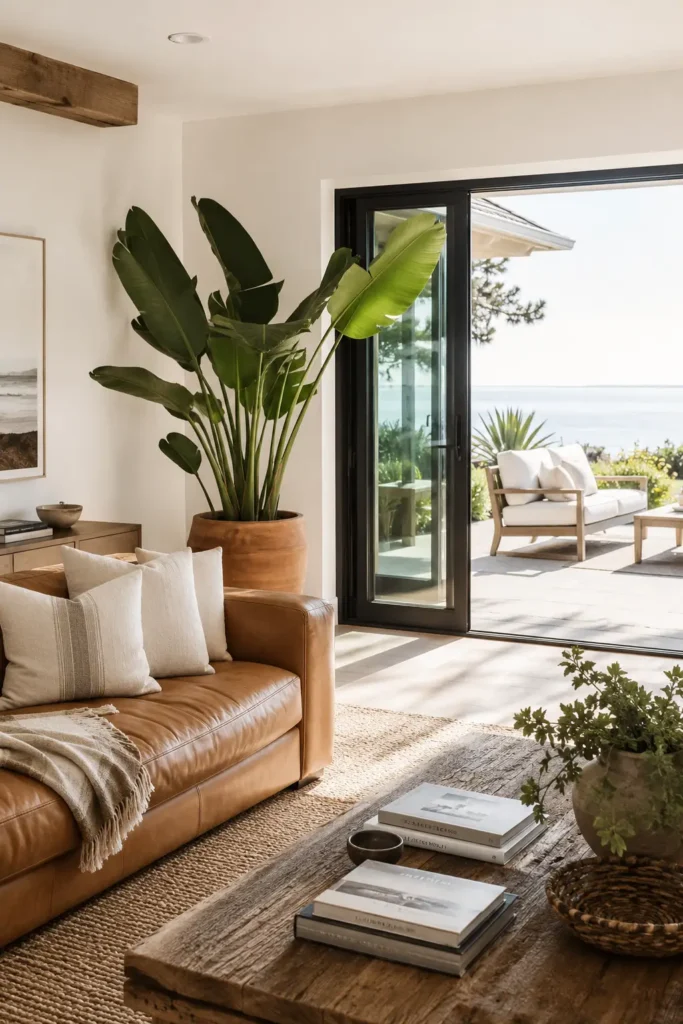
California casual coastal is sunnier and slightly more polished than traditional coastal casual. It draws on the easy indoor-outdoor living of West Coast homes.
- The palette leans warmer — more warm white and sandy terracotta, less grey and navy
- White oak or bleached pine floors are central to the California coastal look — lighter and more sun-washed than dark hardwoods
- A leather sofa or leather accent chair in tan, warm white, or natural cognac suits this style well
- Large indoor plants — birds of paradise, olive trees, or cacti — add to the warm-climate, garden-adjacent feel
- Sliding glass doors or large windows connecting to an outdoor space complete the California coastal look perfectly
California casual coastal is the most relaxed and sun-filled version of the style.
19. Try a Coastal Modern Living Room
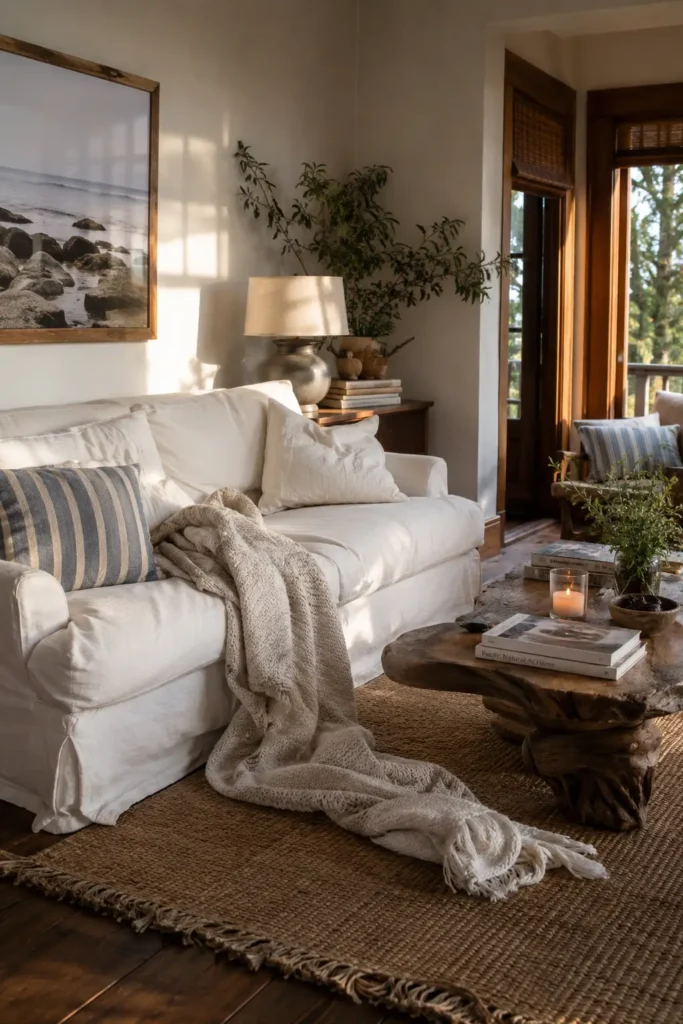
Coastal modern keeps the palette and natural materials of coastal casual but uses cleaner lines and more open space. It’s the most minimal version of the style.
- Furniture has simpler profiles — low-profile sofas, simple rectangular coffee tables, unfussy side tables
- The color palette is more restrained — warm white, one soft blue accent, and natural wood tones
- Natural materials are used with more restraint — one rattan piece, one natural fiber rug, one large plant
- Artwork in coastal modern rooms tends toward the abstract — one large canvas rather than a gallery wall
- Negative space is part of the design — resist filling every surface, and let breathing room do visual work
Coastal modern is for people who love the coastal palette but prefer a cleaner, less layered approach.
20. Embrace Imperfection
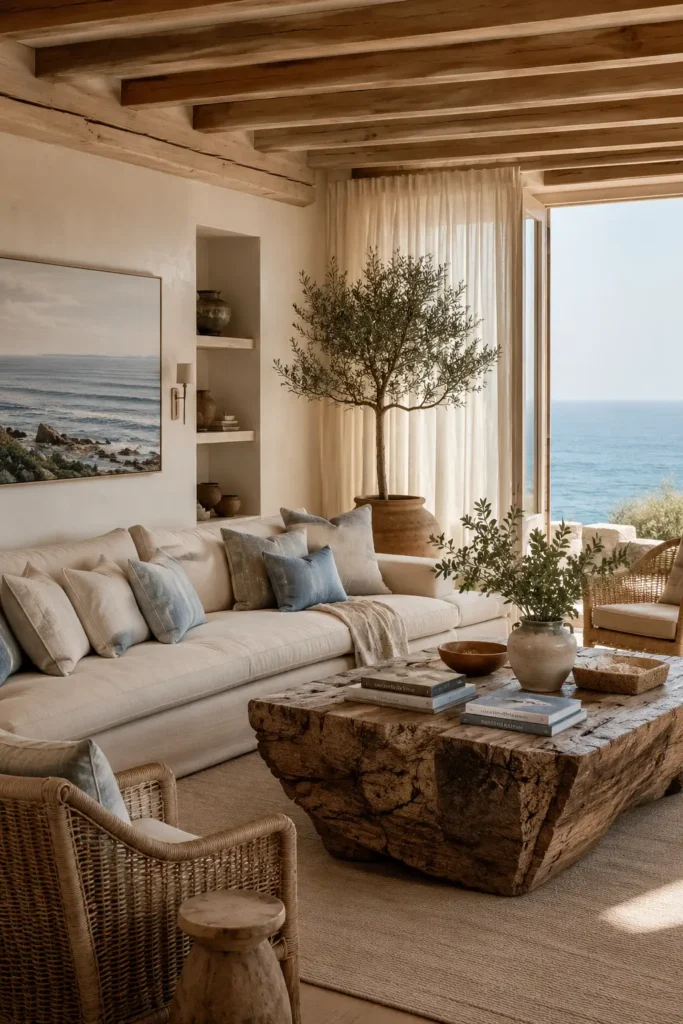
The most important thing about a coastal casual living room is that it feels lived in. Perfection works against the style.
- Wrinkled linen looks better here than pressed fabric — don’t iron your cushion covers
- Let the jute rug fray slightly at the edges — it adds to the natural, worn quality
- A slipcovered sofa that’s slightly rumpled looks more genuinely coastal than one that’s perfectly tucked
- Display objects that actually mean something to you — not just things that look coastal
- Comfort always wins over styling — if a piece of furniture looks good but feels stiff, it doesn’t belong here
A coastal casual living room should feel like a place people actually want to spend time in. That matters more than how it photographs.
Quick Guide — Working with What You Have
If you have a grey couch:
- Use warm sandy or greige walls — avoid cool tones that make the grey look harsh
- Add warm textures — jute rug, rattan furniture, weathered wood — to stop the room feeling cold
- Choose cushions in cream, warm white, and dusty blue rather than cool greys or silvers
If you have a leather couch:
- Soften it with linen cushions and a chunky knit throw
- A large natural fiber rug underneath grounds the leather and adds texture contrast
- Leather suits California casual coastal and coastal traditional styles particularly well
If you have dark floors:
- Use light walls and a large natural fiber rug to counteract the heaviness
- Keep furniture in white, cream, and light natural tones
- Add plenty of natural light — sheer curtains and mirrors both help
Materials that matter most:
- Jute, sisal, seagrass — rugs and baskets
- Linen and cotton — all soft furnishings
- Rattan and cane — accent furniture
- Weathered or whitewashed wood — tables, shelving, mantels
What to avoid:
- Heavy drapes that block natural light
- Shiny or high-gloss surfaces
- Too many coastal objects — curate, don’t accumulate
- Matching furniture sets — the room should feel collected, not coordinated
- Bright saturated blues — always choose dusty, faded, sun-bleached tones