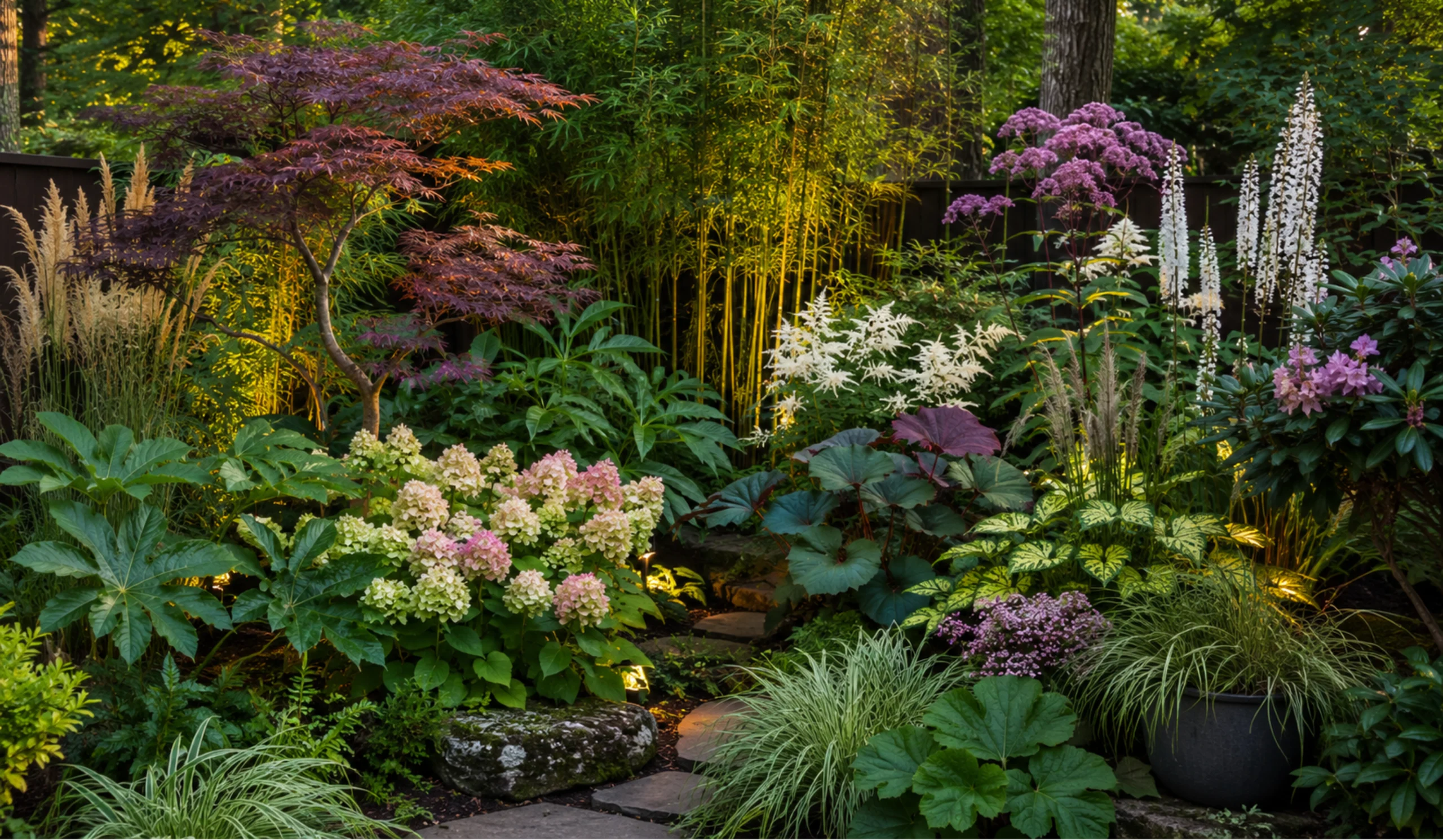

Dark garden areas often feel empty and difficult to style. Poor lighting makes spaces look uninviting. Strategic tall shade plants change everything. The right tall plants add height, texture, and visual interest. They create structure and privacy while thriving without full sun. Your shaded spaces transform into lush, intentional gardens.
These 15 tall shade plants show you exactly which plants thrive in low light. Each plant includes specific placement strategies and practical care information. You will learn growth timelines and spacing requirements. You will understand companion plantings creating beautiful combinations. Most importantly, you will transform dark, empty areas into vibrant garden spaces that feel professionally designed
🌾 1. Feather Reed Grass — Elegant Height Without Bulk
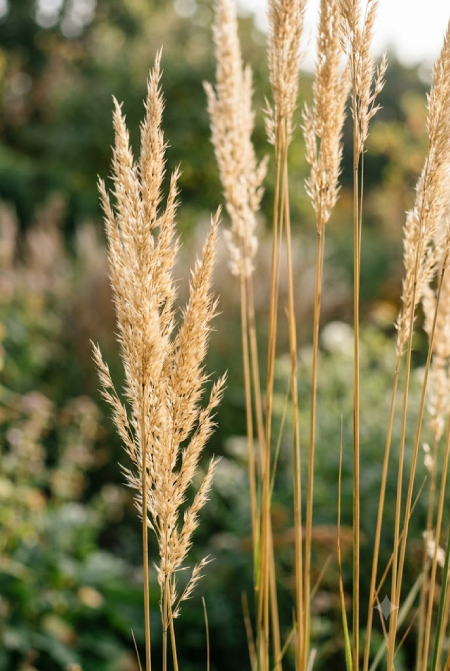
Height: 4-6 feet | Spacing: 2-3 feet apart | Hardiness: Zones 5-9 | Growth Timeline: Reaches full height in 2-3 years
Feather reed grass adds sophisticated vertical movement to shaded patios. The upright form doesn’t crowd nearby plants. Soft feathery plumes appear midsummer creating extended seasonal interest. The grass remains attractive even after frost.
Best Placement: Along patio edges creating privacy without blockage. Flanking seating areas. Grouping near fences. Companion Plants: Pair with shade hydrangeas, hostas, and astilbe creating textured compositions. Care: Moderate water needs once established. Cut back in spring. Tolerates various soil types.
🌸 2. Limelight Hydrangea — Romantic Blooms In Part Shade
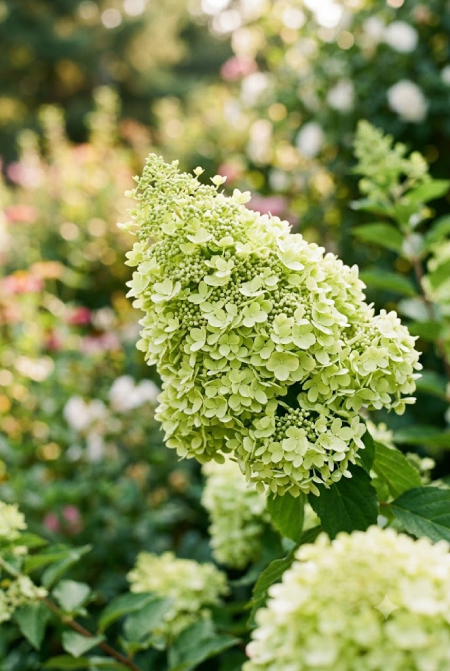
Height: 6-8 feet | Spacing: 4-5 feet apart | Hardiness: Zones 3-9 | Growth Timeline: 3-4 years to full mature size
Limelight hydrangeas bloom abundantly even in part shade. Flowers start lime green, gradually shift blush pink, ending deep burgundy. Extended blooming season from midsummer through fall. Large panicle flowers create romantic, full appearance. Deciduous but provides summer-to-fall color.
Best Placement: Fencelines creating privacy. Foundation plantings. Shade garden focal points. Companion Plants: Underplant with shade perennials, ferns, and hostas. Care: Prefers consistent moisture. Rich soil with organic matter. Prune in spring. Performance improves with years.
🍁 3. Japanese Maple — Graceful Form With Year-Round Interest
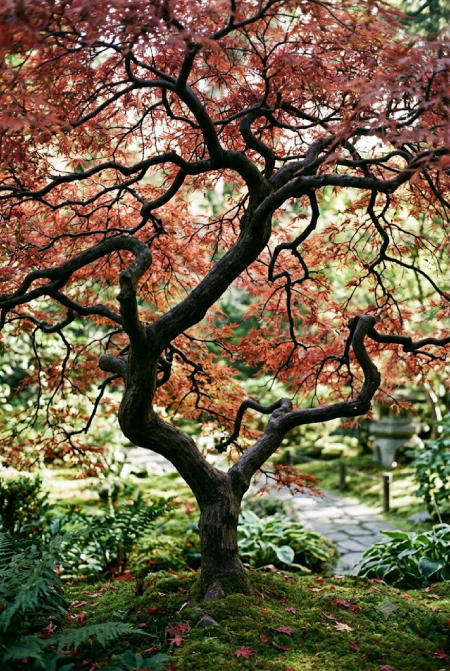
Height: 8-25 feet (varies by variety) | Spacing: 6-10 feet apart | Hardiness: Zones 5-8 | Growth Timeline: 5-7 years to substantial size
Japanese maples provide delicate, artistic form. Spring foliage ranges red to green. Summer dappled shade. Fall dramatic color transformation. Winter reveals elegant branching architecture. Creates focal point without overwhelming smaller plants.
Best Placement: Garden bed centers. Near water features. Patio focal points. Variety Selection: Dwarf varieties for small spaces (Bloodgood, Dissectum varieties). Standard for larger landscapes. Companion Plants: Surround with shade ferns, hostas, astilbe, and japanese forest grass. Care: Prefers consistent moisture and afternoon shade. Avoid hot, dry locations.
🌺 4. Fatsia Japonica — Tropical Luxe In Deep Shade
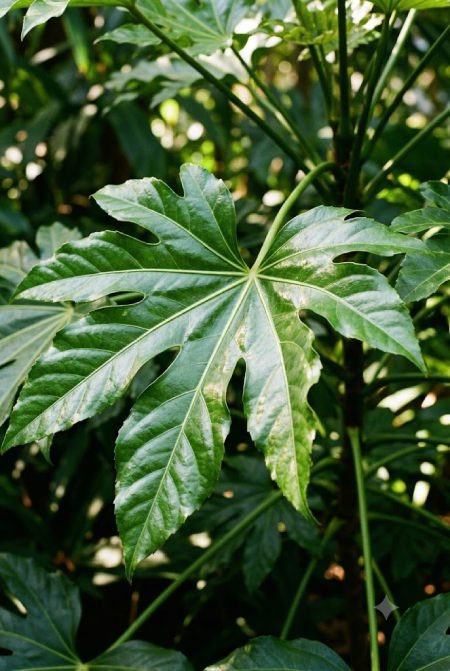
Height: 6-10 feet | Spacing: 3-4 feet from structures | Hardiness: Zones 8-11 (protect in zone 7) | Growth Timeline: 2-3 years to impressive size
Fatsia japonica creates instant tropical feeling in deep shade. Large glossy leaves reflect light. Winter white flower clusters add interest. Works in containers and ground planting. Architectural form makes statement immediately.
Best Placement: Porch containers flanking entries. Deep shade corners. Sheltered foundation plantings. Container Growing: Use large containers (18+ inches) with quality soil. Companions: Pair with trailing ivy, black mondo grass, white begonias. Care: Protect from harsh winds. Consistent moisture preferred. Withstands deep shade better than most plants.
👼 5. Goat’s Beard — Feathery Softness For Shade
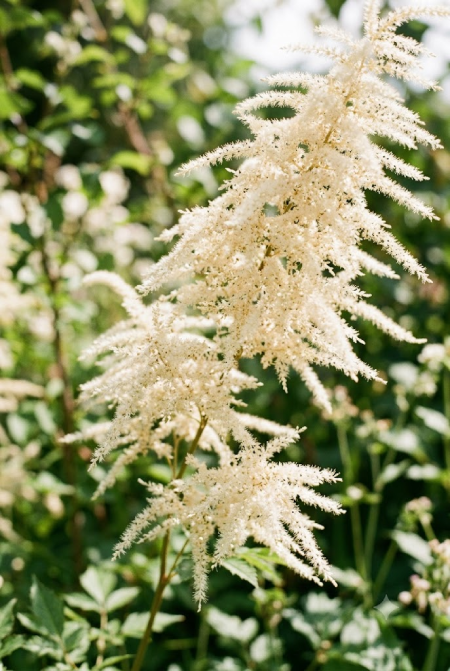
Height: 4-6 feet | Spacing: 3-4 feet apart | Hardiness: Zones 3-9 | Growth Timeline: 2-3 years to full development
Goat’s beard produces airy feathery cream plumes in early summer. Soft texture creates romantic garden feeling. Foliage remains attractive after blooming. Pairs beautifully with bold-leaf plants creating visual contrast.
Best Placement: Back of shade beds. Creates impressive height without stiffness. Beside water features. Companion Plants: Excellent with hostas, ligularia, hydrangeas. Bold foliage plants highlight soft flowers. Care: Prefers consistently moist soil. Enriched soil with organic matter. Tolerates part shade beautifully.
🎋 6. Clumping Bamboo — Instant Privacy And Spa Feeling
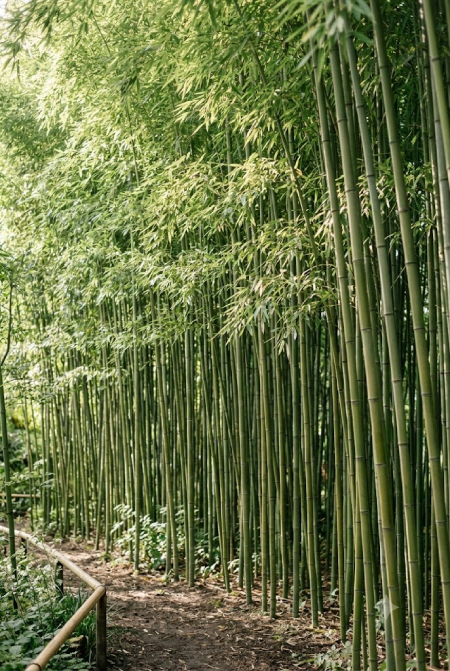
Height: 8-15 feet (clumping varieties) | Spacing: 4-6 feet apart | Hardiness: Zones 6-11 (varies by variety) | Growth Timeline: 2-3 years to privacy screen height
Clumping bamboo creates natural privacy screens and spa-like atmosphere. Non-invasive varieties stay manageable. Vertical canes create strong lines. Soft leaves maintain relaxed feeling.
Variety Selection: CRITICAL — Choose only clumping varieties (never spreading running bamboo). Phyllostachys is running type (invasive). Fargesia or Pseudosasa are clumping. Best Placement: Fencelines creating privacy. Behind patios. Screening unsightly views. Design Integration: Pair with gravel pathways, wood furniture, soft lighting. Care: Protect from harsh winds. Consistent moisture in establishment year. Thin old canes annually.
🌿 7. Ligularia — Dramatic Foliage For Deep Shade
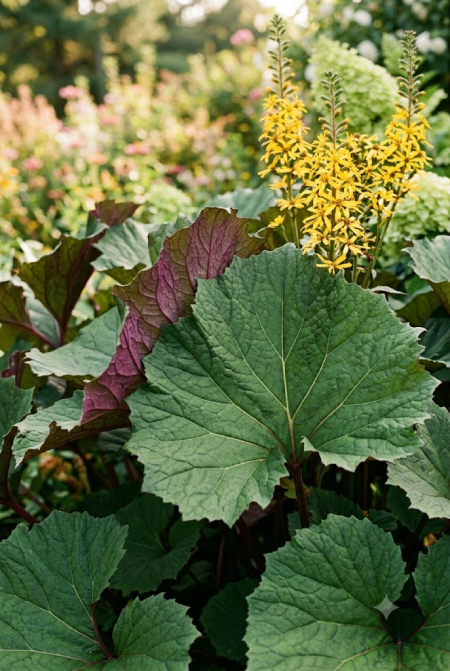
Height: 3-6 feet | Spacing: 3-4 feet apart | Hardiness: Zones 4-9 | Growth Timeline: 1-2 years to mature size
Ligularia’s oversized dramatic leaves instantly attract attention. Large purple-backed leaves reflect light beautifully in deep shade. Yellow flower spikes add summer interest. Creates tropical-inspired atmosphere.
Best Placement: Near water features. Shaded foundation beds. Creates focal point. Moisture Requirements: Prefers consistently moist to wet soil. Excellent choice for pond surrounds. Companions: Pair with ferns, hostas, astilbe. Care: Consistent moisture critical. Rich soil with organic matter. Protection from intense afternoon sun prevents leaf burn.
🌸 8. Tall Astilbe — Airy Height In Dark Borders
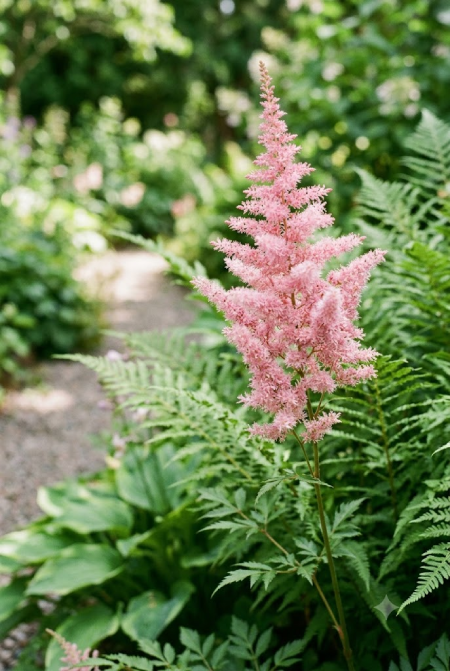
Height: 3-5 feet (tall varieties) | Spacing: 2-3 feet apart | Hardiness: Zones 3-9 | Growth Timeline: 1-2 years to full size
Tall astilbe varieties add soft plumes and bright color to shade borders. Feathery flowers in pink, white, or red varieties. Fern-like foliage remains attractive after blooming. Creates cottage garden feeling. Brightens dark areas naturally.
Variety Selection: Standard astilbe (2-3 feet) vs. tall varieties (4-5 feet). Select based on space. Best Placement: Shade bed borders. Woodland plantings. Patio edges. Companion Plants: Perfect with hostas, hydrangeas, ferns. Care: Prefers consistently moist soil. Rich organic soil. Fertilize spring and early summer. Deadhead extends bloom season.
🌹 9. Rhododendron — Evergreen Structure Year-Round
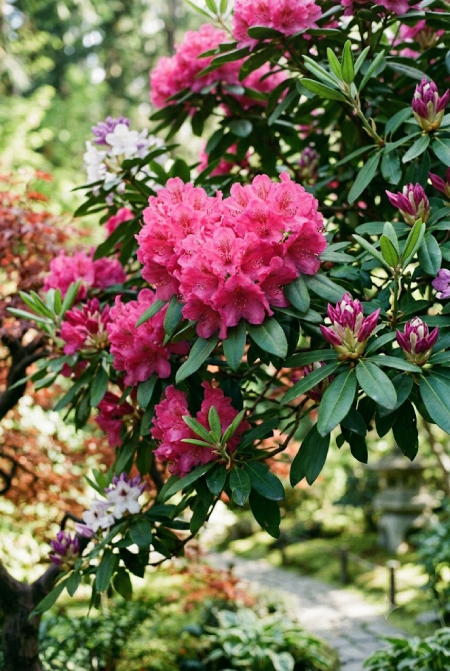
Height: 4-12 feet (varies by variety) | Spacing: 4-6 feet apart | Hardiness: Zones 4-10 (varies by type) | Growth Timeline: 5-7 years to mature form
Rhododendrons provide year-round structure with evergreen leaves. Spring blooms bring spectacular color when little else flowers. Graceful branching adds architectural interest. Manages deep shade beautifully.
Variety Selection: Numerous varieties for different zones and sizes. Dwarf varieties for small spaces. Standard for larger landscapes. Best Placement: Foundation plantings. Fencelines. Front entry landscaping. Privacy plantings. Companion Plants: Pair with shade perennials, ferns, ornamental grasses. Care: Acidic soil critical. Add peat or sulfur if soil alkaline. Consistent moisture. No pruning needed unless shaping.
🌾 10. Japanese Forest Grass — Flowing Motion In Containers
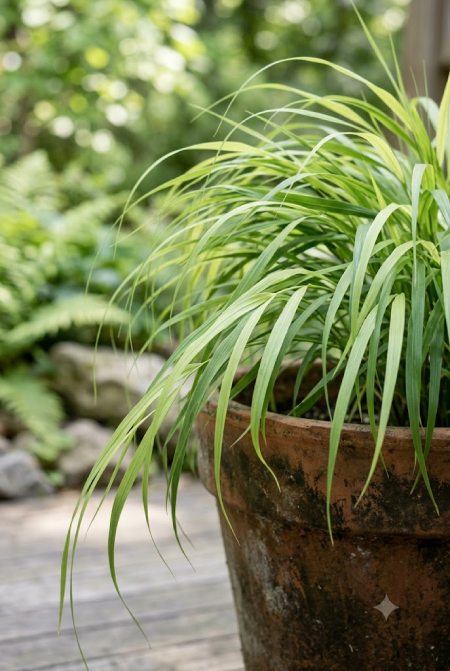
Height: 18 inches to 3 feet | Spacing: 2-3 feet apart | Hardiness: Zones 5-9 | Growth Timeline: 1-2 years to mature clump
Japanese forest grass creates graceful flowing movement in containers and shaded beds. Arching leaf blades create soft texture. Brightens dark corners. Works beautifully in raised planters and containers.
Best Placement: Container plantings on patios. Raised shade beds. Porch plantings. Elevation Strategy: Raise containers on stone risers increasing visual height. Design Combinations: Pair with solid-foliage plants creating visual interest. Care: Prefers moist, humus-rich soil. Partial shade to deep shade toleration. Consistent moisture especially container plants.
🦋 11. Joe Pye Weed — Cottage Garden Height With Butterfly Appeal
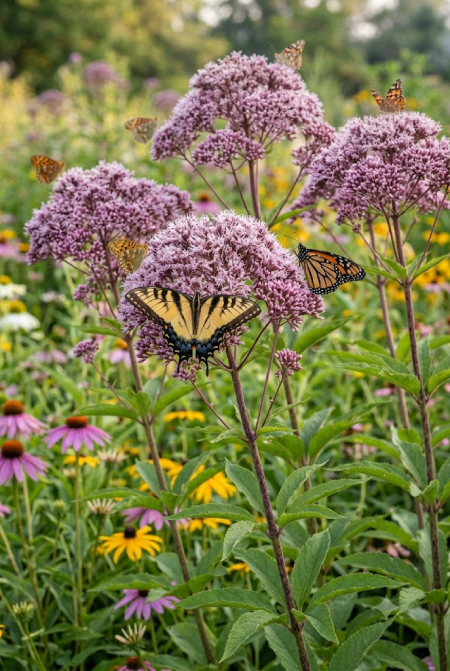
Height: 5-7 feet | Spacing: 3-4 feet apart | Hardiness: Zones 4-9 | Growth Timeline: 2-3 years to impressive height
Joe Pye weed brings height and cottage garden charm to part shade. Soft mauve flower clusters attract butterflies abundantly. Tall stems create wild, naturalized feeling. Perfect for meadow-inspired designs.
Best Placement: Fencelines. Woodland borders. Behind perennial beds. Butterfly Attraction: Magnets for butterflies through summer and fall. Companions: Pair with ornamental grasses, hydrangeas. Care: Tolerates various soil types including clay and damp. Moist conditions preferred but established plants handle drought. Cut back in spring.
🌿 12. Aucuba Japonica — Glossy Foliage Brightening Deep Shade
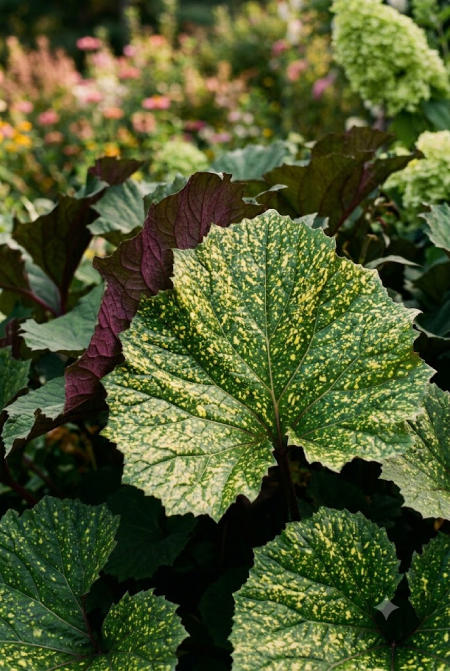
Height: 6-10 feet | Spacing: 3-4 feet apart | Hardiness: Zones 6-10 | Growth Timeline: 3-4 years to mature form
Aucuba’s glossy speckled leaves shimmer in low light instantly brightening dark spaces. Evergreen form provides year-round structure. Tolerates deep shade better than most plants. Creates polished appearance.
Leaf Color: Gold flecked speckled varieties brighten shadow areas. Solid green varieties also available. Best Placement: Deep shade foundation beds. Pathway borders. Corners needing year-round structure. Design Combinations: Pair with ferns. Deep mulch creates elegant contrast. Care: Extremely shade tolerant. Prefers consistent moisture. Minimal pruning needed. Provide female plant for red berries (requires male pollinator).
🌟 13. Cimicifuga (Bugbane) — Glowing White Spikes In Deep Shade
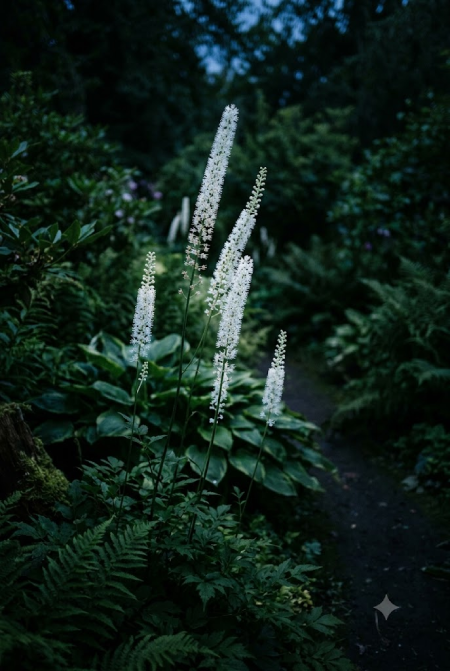
Height: 4-7 feet | Spacing: 2-3 feet apart | Hardiness: Zones 3-8 | Growth Timeline: 2-3 years to impressive height
Cimicifuga’s tall white flower spikes practically glow in deep shade. Dramatic height draws attention upward. Fragrant flowers add sensory dimension. Creates magical evening appearance.
Best Placement: Woodland plantings. Deep shade beds. Behind darker foliage. Patio focal points. Design Integration: Plant near stone pathways or darker foliage. Evening Effect: White flowers catch fading light creating magical feeling. Care: Prefers rich moist soil. Deep shade tolerance. No staking needed despite height. Deadhead extends blooming.
🌾 14. Maiden Grass — Graceful Softness For Fencelines
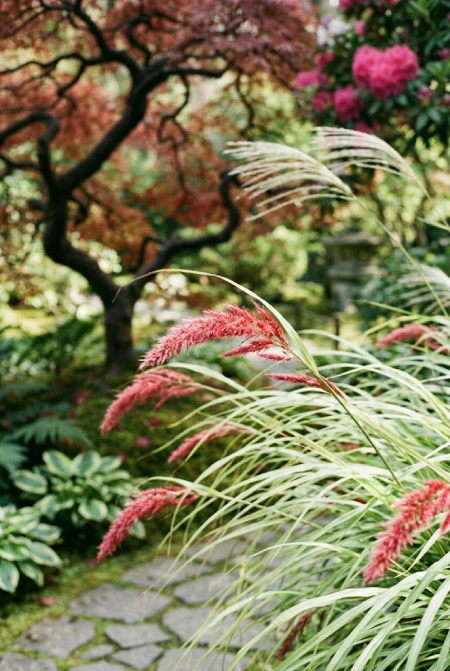
Height: 5-8 feet | Spacing: 2-3 feet apart | Hardiness: Zones 5-9 | Growth Timeline: 2-3 years to full height
Maiden grass adds graceful flowing height without bulky appearance. Tall blades move beautifully in wind. Red flower spikes add seasonal interest. Softer appearance than reed varieties.
Best Placement: Fencelines softening hard edges. Mixed with shrubs. Tall background plantings. Design Combinations: Pair with hydrangeas, rhododendrons. Creates balanced layered designs. Care: Moderate water needs once established. Cut back annually in spring. Extremely adaptable to various soil types.
🌴 15. Aralia — Bold Tropical Height In Deep Shade
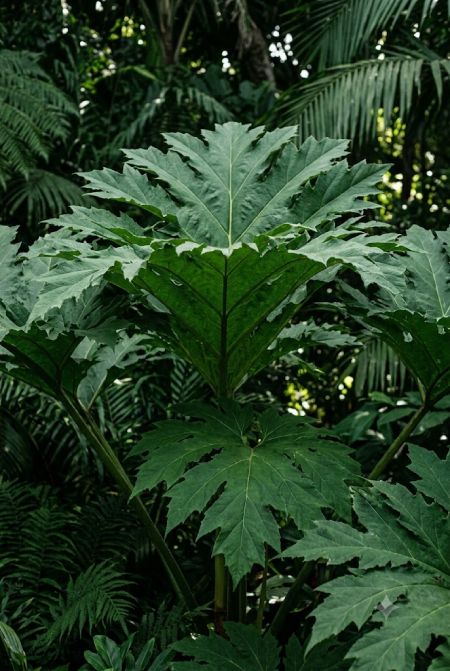
Height: 6-15 feet (varies by variety) | Spacing: 4-5 feet apart | Hardiness: Zones 8-11 (zone 7 with protection) | Growth Timeline: 2-3 years to impressive presence
Aralia creates instant tropical feeling with giant layered leaves. Bold upright growth provides strong architectural statement. Transforms ordinary yards into lush retreats. Handles deep shade beautifully.
Best Placement: Patio focal points. Deep shade corners. Sheltered foundation plantings. Design Integration: Pair with soft lighting, gravel pathways, wood furniture for spa aesthetic. Care: Protect from harsh winds. Consistent moisture preferred. Richly organic soil. No pruning needed unless shaping. Grows slowly adding layers naturally.
🛠️ Quick Practical Guide
Shade assessment guide:
- Full shade — 2-3 hours direct sun maximum
- Part shade — 3-4 hours morning or filtered sun
- Dappled shade — filtered light all day
- Bright shade — indirect reflected light
- Most shade plants tolerate dappled shade beautifully
Soil preparation for shade plants:
- Add 3-4 inches organic matter (compost, leaf mold)
- Shade gardens dry slowly — improve drainage if needed
- Most shade plants prefer enriched soil
- pH adjustment needed for acid-loving plants (rhododendrons)
- Annual mulch refresh prevents compaction
Spacing guidelines:
- Check mature size for each plant
- Space according to mature width not current size
- Tighter spacing fills gaps faster
- Allow growth space preventing overcrowding
- Overcrowding reduces airflow increasing disease risk
Growth timeline expectations:
- Year 1 — Establishment phase, minimal size growth
- Year 2-3 — Active growth, noticeable size increase
- Year 3-5 — Approaching mature size, architectural form evident
- Year 5+ — Mature form, maintenance focus shifts
Companion planting for shade:
- Pair tall plants with medium-height plants
- Include low-growing groundcovers
- Mix textures (feathery, bold-leaf, fine)
- Include different bloom times for season-long interest
- Vary colors but maintain cohesion
Hardiness zone considerations:
- Zone 3-4 — Cold-hardy plants only (astilbe, cimicifuga)
- Zone 5-6 — Extended options (bamboo with protection)
- Zone 7-8 — Tropical options possible (aralia with protection)
- Zone 9-11 — Full tropical possibilities
- Always check plant hardiness for your zone
Common shade planting mistakes:
- Overcrowding plants in space
- Choosing plants unsuited to light conditions
- Inadequate soil preparation
- Inconsistent watering establishment year
- Planting too deep or too shallow
- Ignoring soil drainage issues
- Expecting full sun results in shade
Seasonal color progression:
- Spring — Rhododendrons, early cimicifuga
- Late spring/early summer — Hydrangeas, astilbe, goat’s beard
- Mid-summer — Joe Pye weed, bamboo
- Late summer/fall — Cimicifuga, maiden grass plumes
- Year-round — Evergreen structure (rhododendrons, aucuba)
Maintenance schedules:
- Spring — Cut back old growth, fertilize, mulch refresh
- Summer — Monitor moisture, deadhead blooms
- Fall — Collect leaves, apply compost
- Winter — Plan for next season, protect tender plants
Watering needs by plant:
- Hydrangeas — Consistent moisture critical
- Ligularia, Joe Pye weed — Prefer moist soil
- Bamboo establishment — Weekly watering year 1
- Japanese maple, rhododendron — Regular watering until established
- Most shade plants — Prefer moist but not soggy
Container growing in shade:
- Use large pots (18+ inches) holding moisture
- Quality potting soil with added compost
- More frequent watering than ground plants
- Elevation on risers increases visual height
- Grouping containers creates visual impact
Design principles for shade:
- Use variegated or light foliage brightening dark areas
- Layer heights creating depth and interest
- Vary textures preventing monotony
- Position focal points (Japanese maple, bold shrubs) strategically
- Use pathways directing attention
- Lighting enhances evening beauty
Budget approach:
- Start with evergreen structural plants
- Add perennials gradually
- Use smaller plants filling gaps quickly
- Propagate existing plants expanding plantings
- Collect fallen seeds creating free plants
- Thoughtful spacing reduces plant count needed