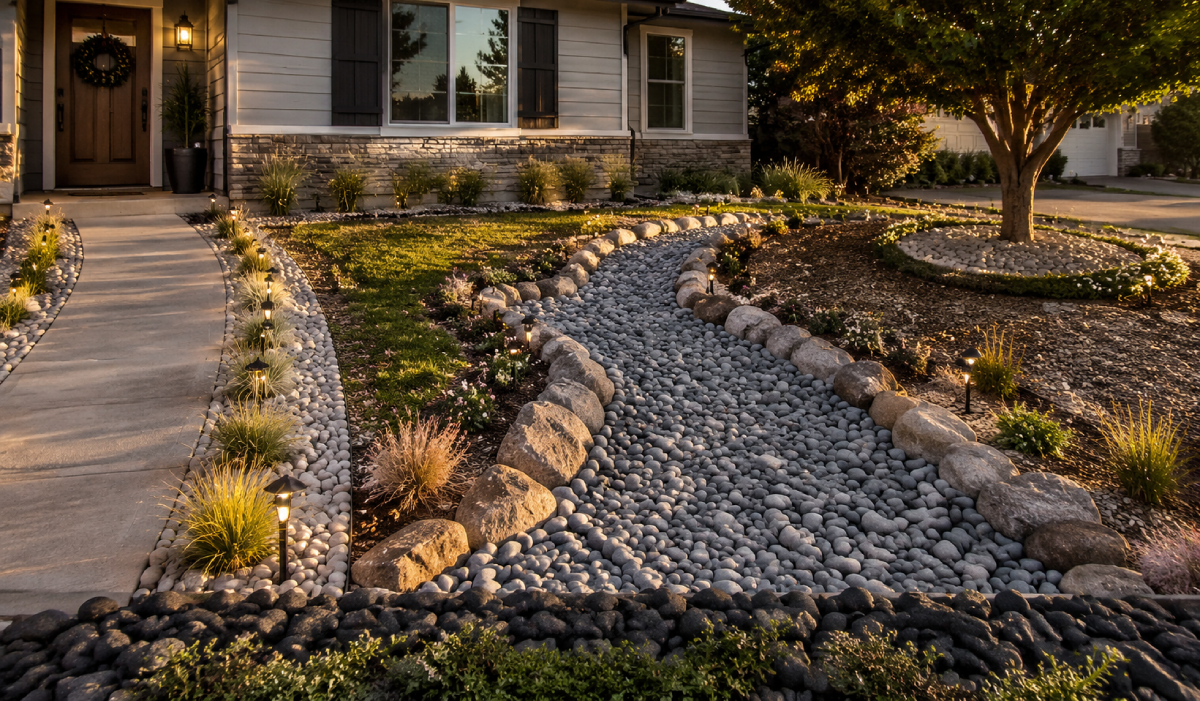

Standing in a small front yard and wondering what to do with it is one of the most common problems homeowners face. You want something that looks intentional and polished, but you do not want to spend every weekend maintaining it.
That is exactly where rock beds around house in small front yards become the best decision you can make. Rock beds add structure, reduce maintenance dramatically, suppress weeds, and make even the smallest yard look genuinely designed. You do not need a large space or a large budget to make them work.
These 15 ideas are beginner-friendly, easy to maintain, and designed to make your front yard feel complete without overwhelming it.
🛤️ 1. Frame Your Walkway With Clean Rock Borders
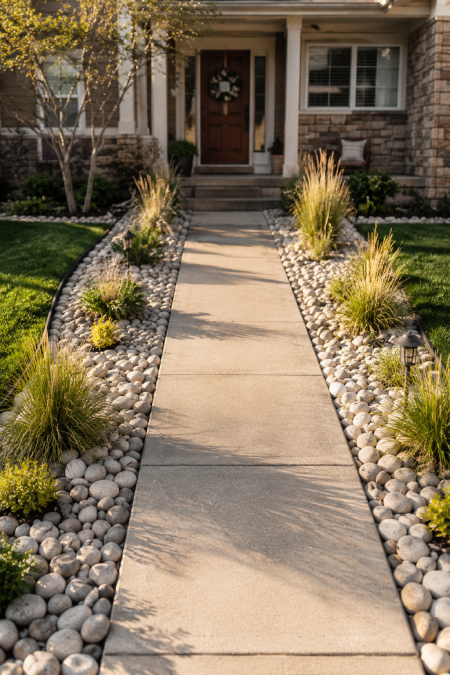
A rock border along your front walkway is one of the simplest improvements you can make to a small front yard. It instantly gives structure to the space and makes everything feel more organised and purposeful.
The border visually separates the path from the surrounding yard, creating defined zones without needing fences or any bulky features. Use pea gravel for a softer, cottage-style look or larger river rocks for stronger contrast. A rock bed around the house alongside a walkway also keeps weeds at bay and prevents mud from washing onto the path during rainy weather — a genuinely practical bonus on top of the visual improvement.
🏠 2. Create a Minimalist Strip Along the Foundation
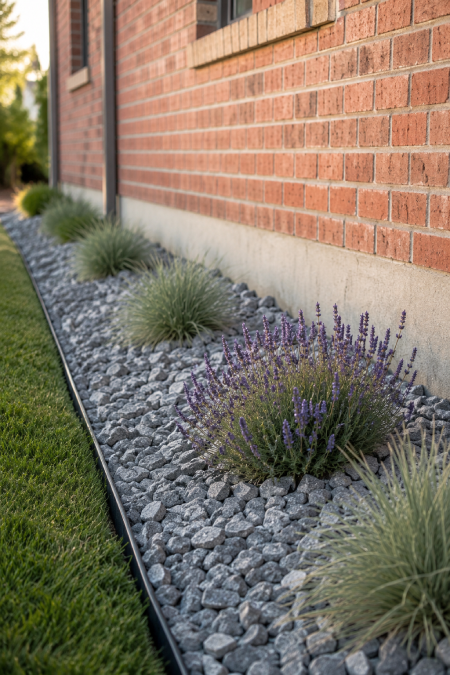
A narrow rock bed along the base of your home is one of the most underrated rock beds around house in small front yards ideas. It takes up very little space but adds real visual impact — and it protects your walls from dirt splashing up during rain.
This foundation rock bed gives a tidy, low-maintenance finish to the base of your home that soil or bare mulch simply cannot match. Mix in a few small shrubs or ornamental grasses for height variation without complexity. The combination of clean rocks at the base and deliberate plantings above immediately makes the front of your home look more considered and finished.
🌵 3. Add a Small Rock Garden With One Statement Plant
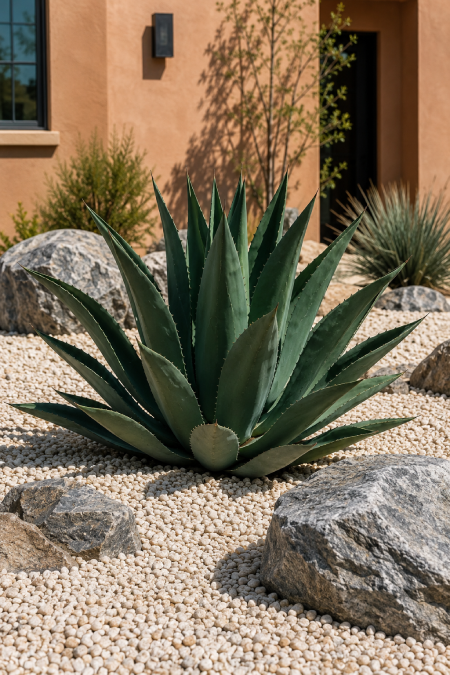
In a small front yard, less is almost always more. A single rock garden built around one standout plant — a dwarf maple, agave, ornamental grass, or architectural succulent — creates a clear focal point without cluttering the space.
The rocks act as a neutral, clean base that lets the plant do all the visual work. This approach is also significantly easier to maintain since you are caring for one main plant rather than a complex mixed planting. Rock beds in small front yards really do shine with this kind of restrained, intentional approach. It looks more designed than a yard stuffed with many competing elements.
⚫ 4. Use Contrasting Rock Colors for Visual Interest
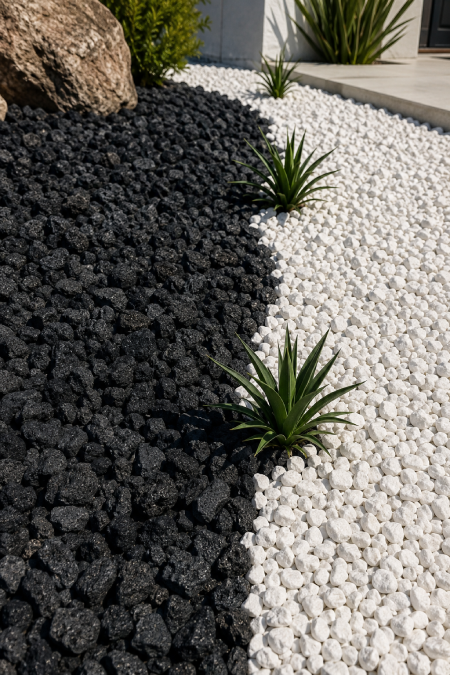
Playing with color contrast is one of the most effective styling decisions you can make when planning rock beds around house in small front yards. Mixing darker stones with lighter ones adds depth and makes even a compact space feel more dynamic and layered.
Black basalt against white gravel creates a clean, modern contrast that looks striking in both minimal and contemporary front yard designs. You can also use color contrast to outline specific areas — rock borders around planting beds or path edges become much clearer when two different stone tones meet. This technique works especially well in small yards where architectural detail is needed to create visual interest without adding more plants or features.
🌿 5. Fill Empty Corners With Decorative Rock Beds
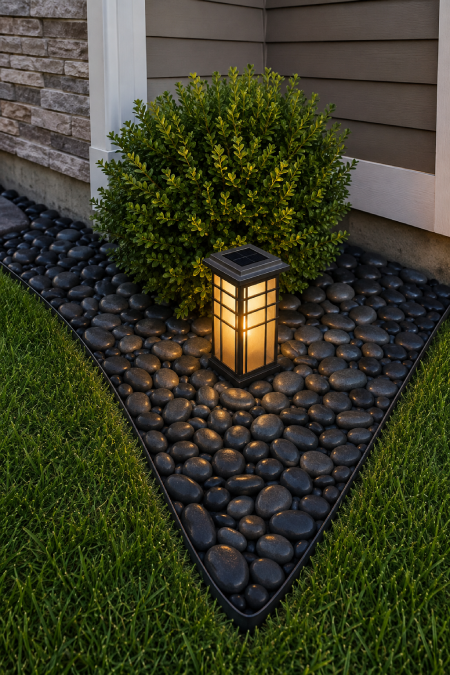
The awkward corners of a small front yard often feel like wasted space. But they are actually ideal spots for a compact rock bed. Filling a corner with stones and one or two plants makes the whole yard feel complete rather than unfinished.
Add a small shrub, a solar lantern, or a decorative planter within the corner rock bed to give the space a clear focal point. Decorative rock beds in small front yards work especially well in corners because they require minimal square footage but visually anchor the entire yard. The rocks soften harsh angles and create a sense of balance that makes the overall layout feel deliberately planned.
🪨 6. Add Stepping Stones Through a Rock Bed
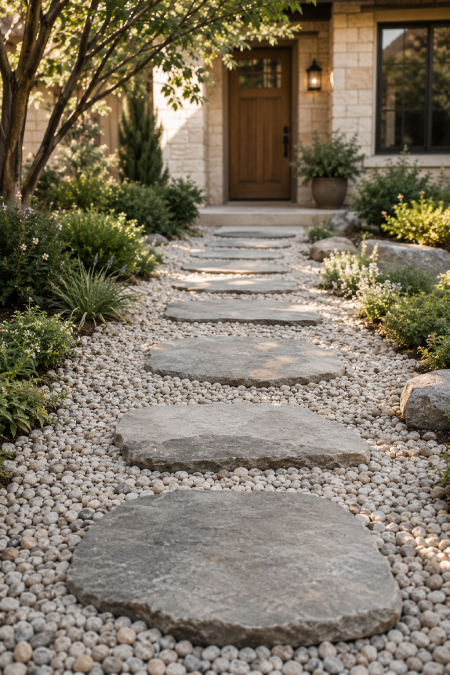
Combining stepping stones with a surrounding rock bed creates both function and style simultaneously. You get a defined walking path while keeping that clean, minimal aesthetic that makes rock beds so appealing.
Flat stones spaced evenly through a gravel or pebble bed feel calm and intentional underfoot. This approach also protects soil and prevents the wear patterns that foot traffic creates in lawn or garden beds. Use the stepping stone path to lead naturally toward your front door, a seating area, or a garden feature. It adds a slightly playful element without making the yard feel cluttered.
🌾 7. Mix Rocks With Low-Maintenance Plants
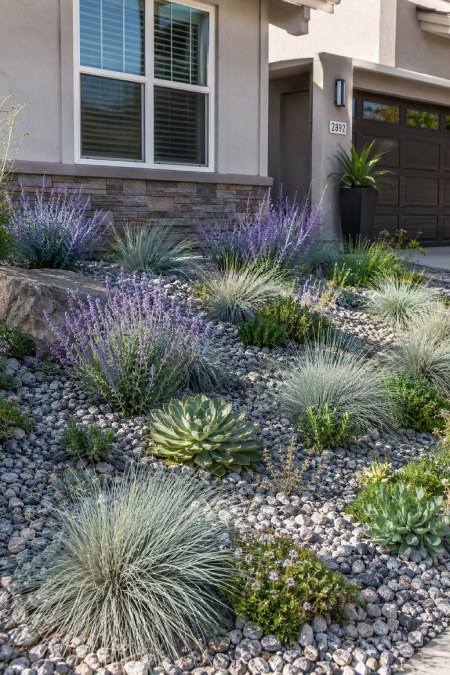
Pairing rocks with hardy, low-water plants gives a front yard the best of both worlds. The stones provide year-round structure and texture while the plants add softness, seasonal interest, and life to the space.
Succulents, ornamental grasses, small evergreens, and lavender all work beautifully within front yard rock bed designs. These plant types are drought-tolerant, hold their shape well between seasons, and need very little maintenance once established. This combination also prevents the yard from feeling too stark or industrial. The greenery breaks up the stone beautifully without adding significant ongoing maintenance demands.
🌊 8. Create a Dry River Bed Feature
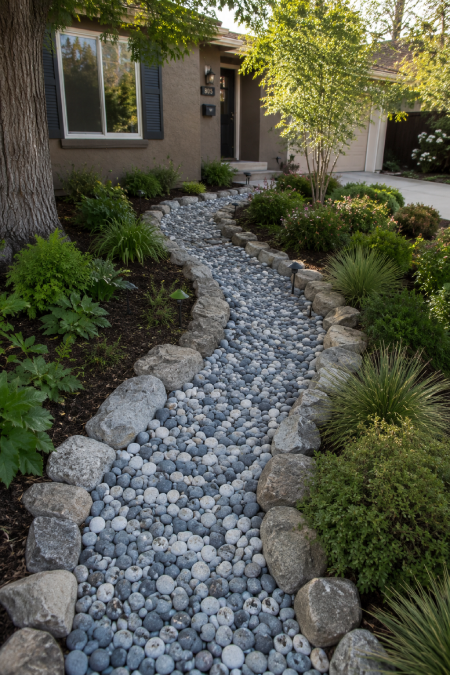
A dry river bed is one of the most creative rock bed ideas for small front yards because it adds movement and personality to a space that might otherwise feel static. Smooth stones arranged in a winding shape create the convincing illusion of a natural stream cutting through the landscape.
Edge the river bed with slightly larger rocks on both sides to define the shape clearly. A dry river bed is also genuinely practical — it guides rainwater runoff naturally through the yard rather than allowing it to pool. If your small front yard has drainage challenges, this design solves a real problem while making the space look significantly more interesting.
🚗 9. Line Your Driveway With Rock Borders
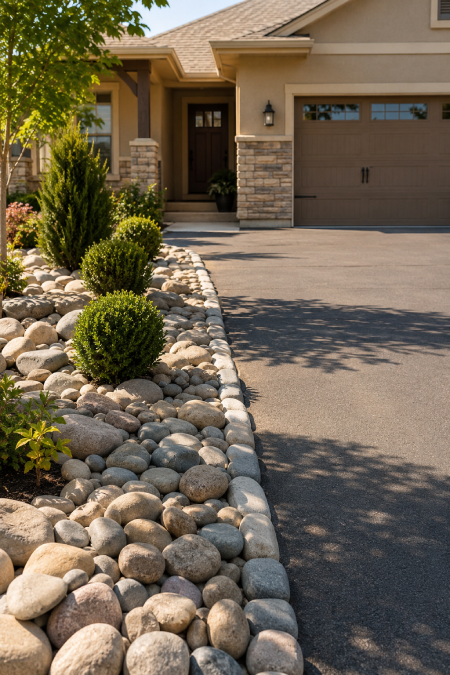
A rock border along a driveway keeps the front of a property looking tidy and clearly defined. It prevents grass from creeping into the driveway edge and gives a clean, maintained boundary that instantly improves kerb appeal.
Use crushed stone for a compact, low-profile finish or larger decorative rocks for a softer, more naturalistic look. A rock bed along the driveway is one of those small changes that makes the entire front of a home feel significantly more finished and deliberate. This works especially well for small front yards where the driveway takes up a large proportion of the available space.
🗿 10. Use Large Rocks as Natural Accents
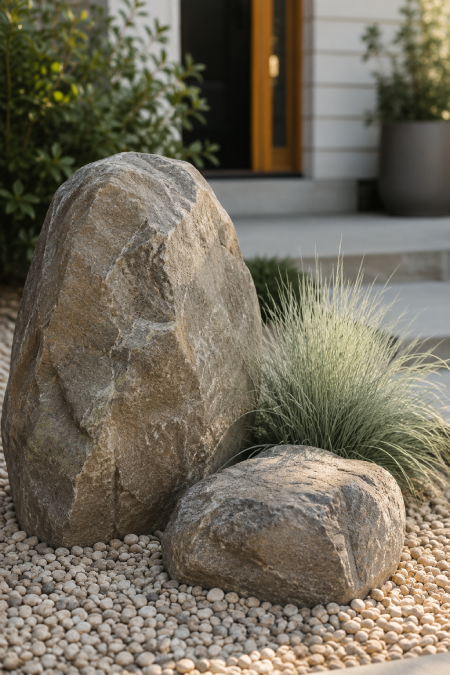
A few strategically placed large rocks give a front yard a grounded, natural, and genuinely composed feeling. They act as anchors within the design and break up the texture of smaller gravel or pebble beds in a way that feels organic rather than forced.
Just one or two large stones in a small front yard rock bed can make the space feel thoughtfully designed without adding complexity. You do not need many — in fact, fewer large rocks work better than many small ones in a compact yard. Choose rocks with interesting natural shapes or warm earthy tones that complement your house exterior. The result feels organic, grounded, and completely intentional.
🌳 11. Create a Rock Bed Around a Tree
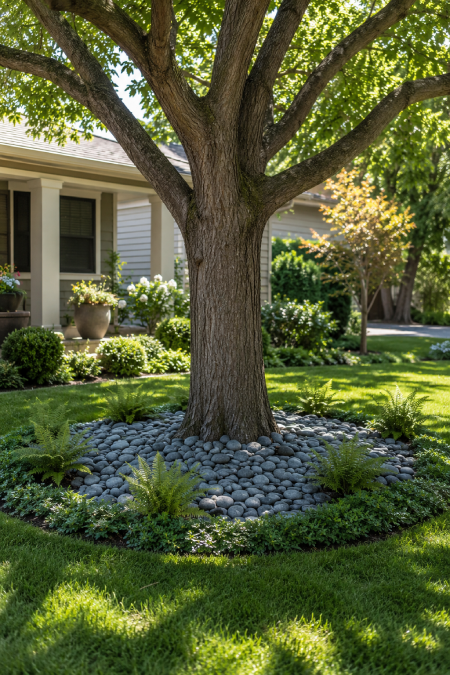
If you already have a tree in your front yard, surrounding it with a circular rock bed is one of the easiest and most impactful upgrades available. It instantly transforms an ordinary garden feature into something that looks genuinely intentional and designed.
A circular or organically shaped rock bed around a tree prevents weeds, reduces maintenance around the tree base, and eliminates the frustrating challenge of mowing or trimming right up to the trunk. Choose a simple ring of matching rocks for a clean look, or create a more irregular organic shape for a naturalistic feel. Add a few small plants at the outer edge to soften the transition between the rock bed and the surrounding lawn.
🔆 12. Add Lighting to Your Rock Beds
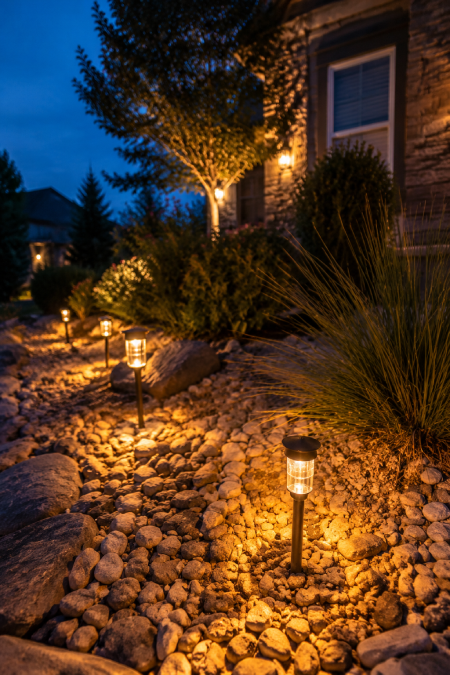
Solar lighting within a rock bed completely transforms how a front yard feels in the evening. The rocks themselves reflect and amplify light beautifully — especially lighter-toned stones like white gravel or pale river rocks.
Place small solar stake lights within the rock bed at intervals, tucked slightly among the stones so the lights appear to emerge from within the landscape rather than sitting on top of it. This creates a soft, warm glow that makes the front yard feel welcoming and genuinely beautiful after dark. Rock bed solar lighting also adds a security benefit without harsh overhead lighting that disrupts the relaxed evening atmosphere.
🌱 13. Use Rocks to Replace Patchy Grass
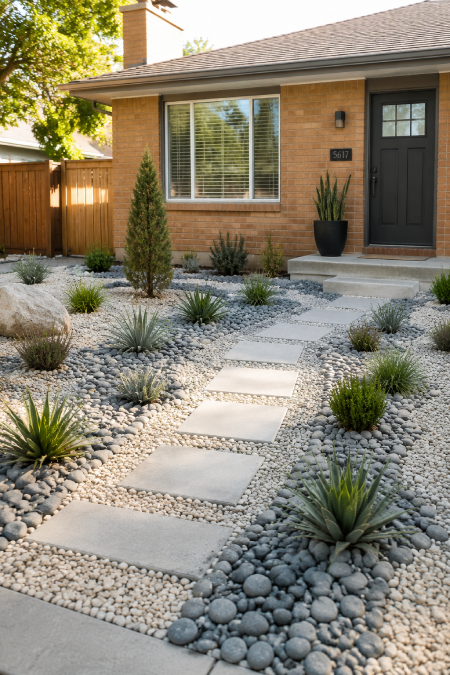
Patchy, struggling grass is one of the most common front yard frustrations. Replacing it with a well-designed rock bed is a genuine solution that eliminates the ongoing maintenance challenge permanently.
A gravel and rock replacement for poor lawn looks significantly cleaner than patchy grass, requires almost zero ongoing upkeep, and suits a wide range of house styles from modern to cottage. Combine the rock base with stepping stones, small plants, or ornamental features to keep the space interesting. Replacing patchy grass with rocks is one of the most practical and transformative small front yard landscaping ideas available for homeowners who are tired of fighting a losing battle with their lawn.
🪑 14. Define a Tiny Seating Area With Rocks
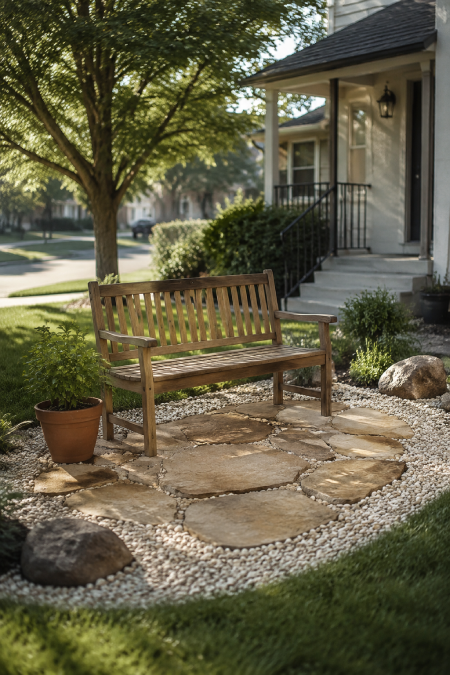
Even the smallest front yard can include a cozy seating spot when rocks are used cleverly as a defining base. A small section of flat stone or gravel creates a stable, clean surface for a bench or two chairs without needing a full patio installation.
The rock base defines the seating zone clearly without physical barriers, making the area feel designated and comfortable. Add a small table and perhaps a potted plant or two to complete the arrangement. Using rock beds to define seating areas in small front yards works so well because it creates a sense of purpose and liveability that makes the whole yard feel more welcoming — not just something to look at from the street.
🌺 15. Edge Flower Beds With Decorative Stones
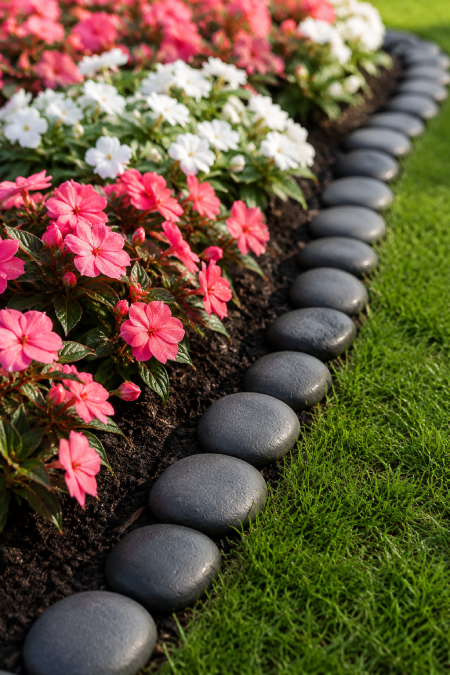
Using decorative rocks to edge existing flower beds gives a front yard a neat, finished look that soil or plastic edging simply cannot match. The stones keep soil contained cleanly, create a clear visual boundary between plants and surrounding lawn, and add a polished detail that ties the whole yard together.
Match the stone color to other rock elements already in the yard for a cohesive, planned look. The rock edging also makes your flowers and plants stand out more by framing them against a neutral, clean base. This is one of the quickest and most affordable front yard rock bed ideas available because it works with planting beds you already have.
🛠️ Quick Practical Guide
Best rock types by use:
- Pea gravel — walkway borders, dry river beds, foundation strips
- River rocks — tree surrounds, accent beds, driveway borders
- Black basalt — contrast beds, modern design accents
- Crushed stone — driveway edging, high-traffic areas
- Large boulders — focal point anchors, natural accents
Best plants to mix with front yard rock beds:
- Ornamental grasses — movement, texture, drought tolerant
- Lavender — fragrance, color, suits all styles
- Succulents — architectural, extremely low water needs
- Dwarf evergreens — year-round structure, no seasonal replanting
- Creeping thyme — fills gaps between stepping stones, very low maintenance
Cost guide for small front yard rock beds:
- Pea gravel — $30-$60 per cubic yard
- River rocks — $50-$100 per cubic yard
- Decorative colored rocks — $60-$120 per cubic yard
- Large boulders — $100-$400 each depending on size
- Solar lighting — $15-$40 per set of 6-10 lights
- Landscape fabric (weed barrier) — $20-$50 for a small yard
Biggest beginner mistakes to avoid:
- Skipping landscape fabric beneath rocks — weeds push through within one season
- Using too many rock types — pick two maximum for a cohesive look
- Rock beds too narrow — anything under 12 inches looks like an afterthought
- Choosing rocks that clash with the house color — warm-toned house needs warm-toned rocks
- No edging between rock bed and lawn — grass creeps in quickly without a clear physical border
What makes a rock bed look expensive versus cheap:
- Deep, generous depth of rock (3-4 inches minimum) — thin layers look sparse
- Consistent stone size within each zone
- Clean physical edging with metal or stone borders
- Deliberate plant placement rather than random scattering
- Matching rock tones to house exterior colors