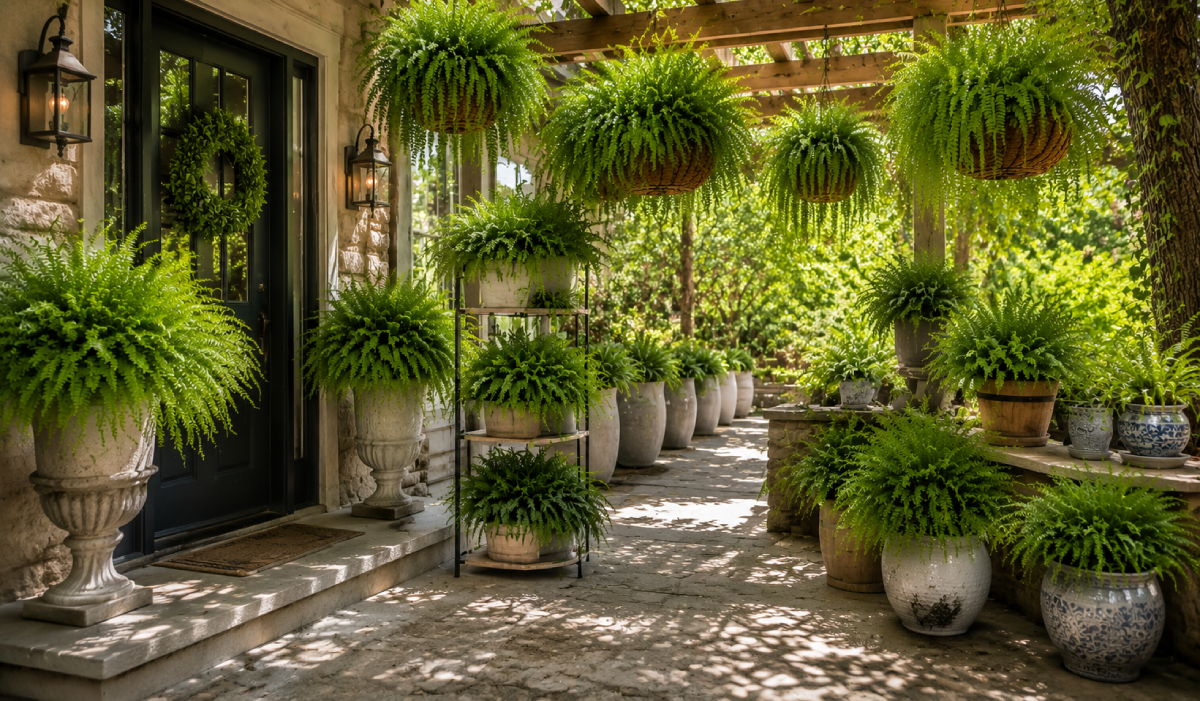

Ferns are one of the easiest and most versatile ways to add soft, lush greenery to any space without constant maintenance. They thrive in shade where other plants struggle, they stay full and visually interesting year-round, and they work beautifully in nearly any container style.
These 20 fern planter ideas cover front porch setups, indoor placements, shade gardens, balconies, and creative combinations. Whether you want a single Boston fern in a beautiful pot or an entire fernery garden across your patio, every idea here is practical, achievable, and genuinely low-maintenance.
🚪 1. Frame Your Entry With Matching Fern Planters
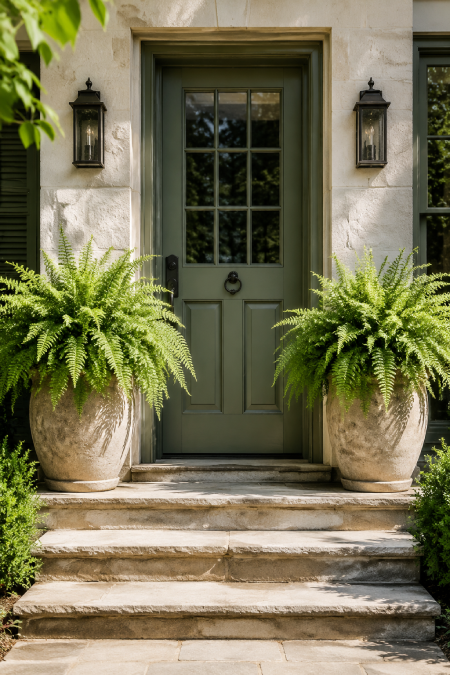
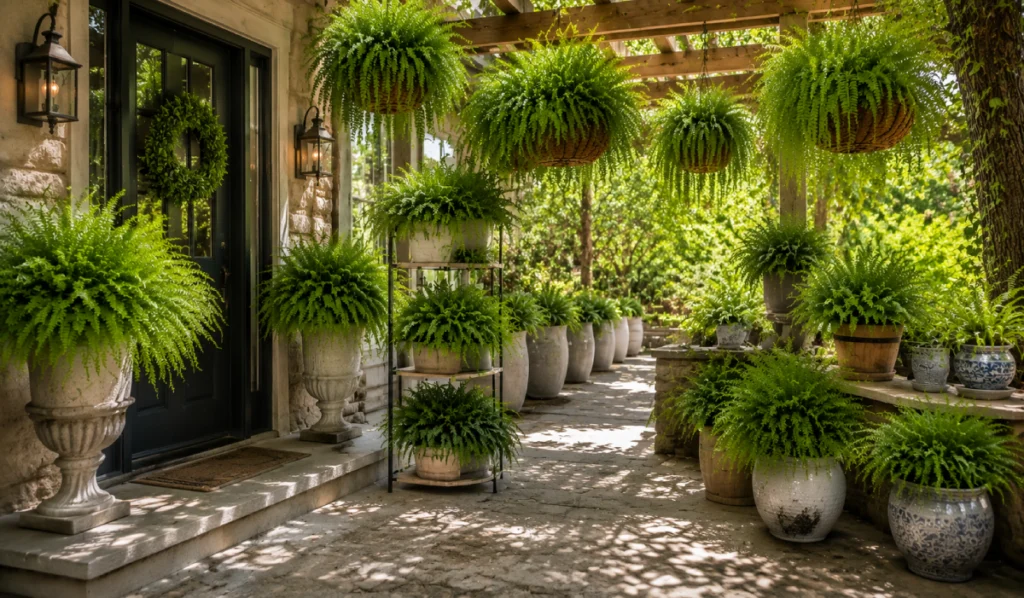
Two identical fern planters on either side of a front door create instant balance and curb appeal that is genuinely hard to achieve any other way. Ferns naturally grow in a full, rounded shape that fills containers evenly without looking messy or overgrown.
Choose medium to large pots in materials like ceramic, stone, or concrete to ground the look and make the setup feel permanent and intentional. This is one of the most reliable front porch fern planter ideas for improving overall home appearance with almost zero maintenance.
🌸 2. Mix Ferns With Petunias for Color Contrast
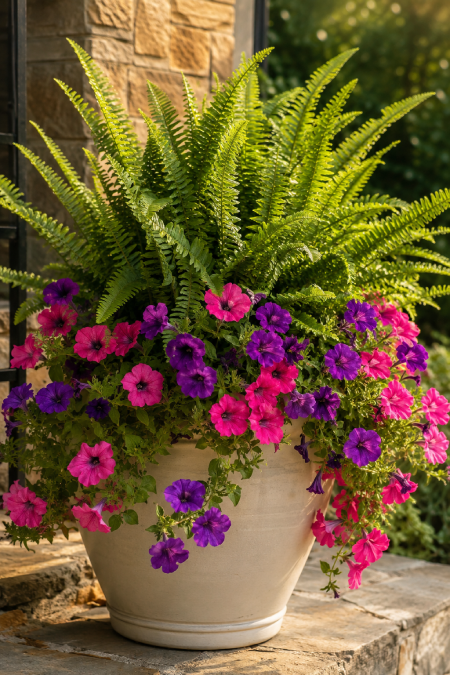
Combining soft fern fronds with bright petunias creates visual interest without overwhelming the space. The ferns provide density and green structure while the petunias introduce seasonal color that draws attention naturally.
Use trailing petunias so they spill slightly over the planter edge, adding depth and movement. Both plants work well together and this pairing is especially effective for front porch fern planter ideas where you want something noticeable but balanced.
🧺 3. Use Hanging Fern Baskets to Save Floor Space
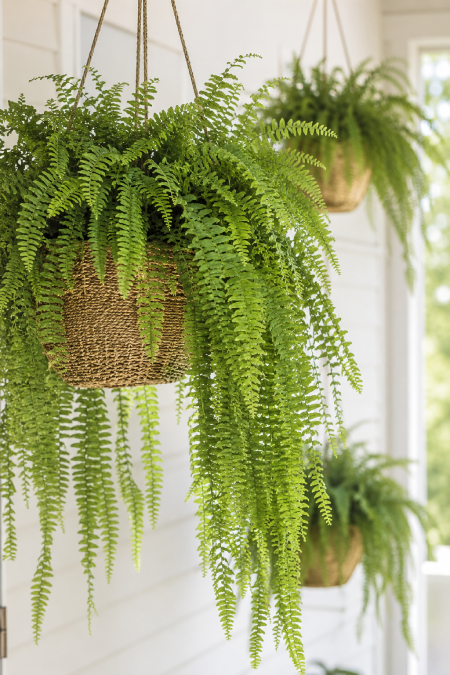
Hanging fern baskets are ideal when you want lush greenery but have limited floor space on a porch or balcony. Ferns naturally grow downward, filling hanging containers beautifully and creating a full cascading look without any styling effort.
Layer several baskets at different heights to create visual depth while keeping the floor completely clear. This approach is especially effective for small patios, balconies, or entryways where you want that lush fern garden feel without clutter.
🪵 4. Use Wooden Planters for a Natural Look
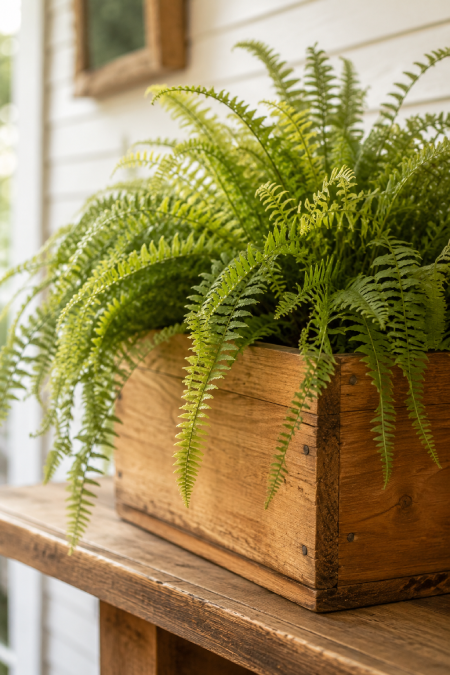
Wooden planters add warmth and organic texture that pairs beautifully with the soft delicacy of fern fronds. The contrast between structured wood and loose, feathery greenery creates a naturally balanced look that feels intentional without being overly styled.
Repurposed wooden crates or weathered boxes work equally well and cost significantly less. This approach is perfect for porch planter ideas with ferns where you want a relaxed, rustic aesthetic.
📚 5. Use a Tiered Plant Stand for Layering
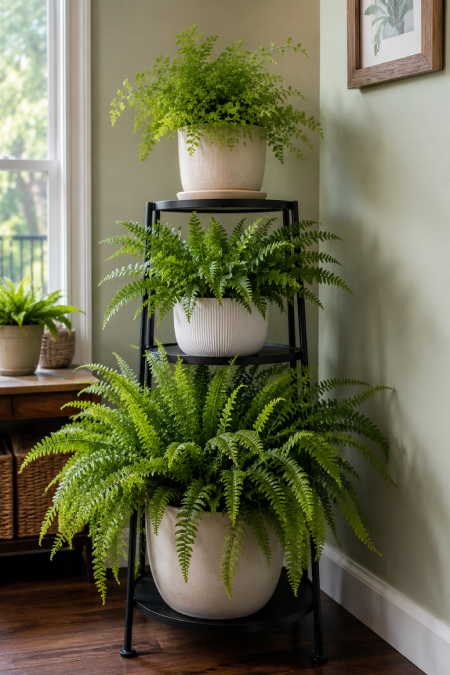
A tiered plant stand allows you to display multiple ferns at different heights, creating a layered effect that makes the arrangement feel far more intentional than everything sitting flat on the ground. Place larger ferns on lower levels and smaller varieties above to keep the visual balance.
This approach works beautifully both indoors near a bright window and outdoors in shaded areas. It is especially useful for building a small fernery in compact spaces where you want everything to feel full and lush without spreading across the ground.
🤍 6. Combine Ferns With White Impatiens for a Clean Look
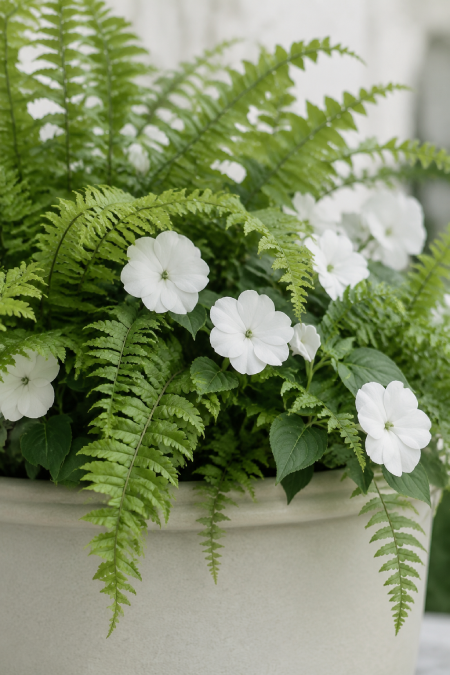
Pairing ferns with white impatiens creates a simple, clean arrangement that feels organized and polished without being overly decorative. The white flowers add gentle definition against the green fronds while remaining subtle and elegant.
Both plants thrive in similar shade conditions, making them genuinely easy to maintain together. This combination is perfect for shade potted plants for front porches where bright flowers might feel overwhelming but you want something fresh and intentional.
🏛️ 7. Use Large Pots for a Strong Focal Point
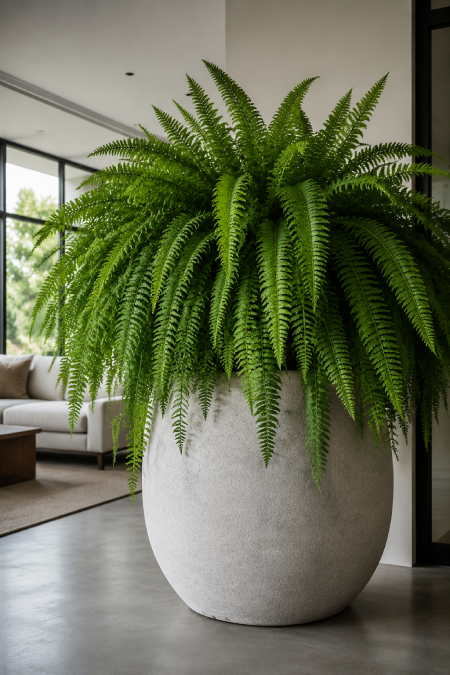
Larger fern planters create bold focal points that help anchor spaces and provide visual weight. Instead of blending into the background, a generous planter of Boston ferns or Kimberly queen ferns becomes a genuine design feature that commands attention naturally.
This works beautifully in entryways, patios, or open indoor spaces where you need something to visually fill empty area. Keep the pot design simple so the lush fern foliage remains the star.
🌿 8. Create a Shaded Fern Corner
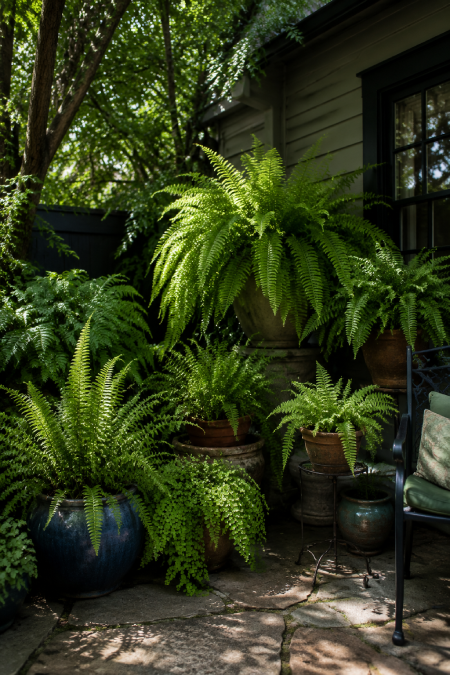
Grouping several fern planters together in a shaded corner creates a dedicated green space that feels calm and peaceful. Repeating the same plant type creates visual cohesion while using different fern varieties introduces subtle texture variation.
This setup is ideal for anyone wanting to build a small fernery that feels genuinely serene and intentionally designed. The shade corner becomes a natural retreat space both visually and functionally.
🌺 9. Mix Ferns With Caladiums for Colorful Foliage
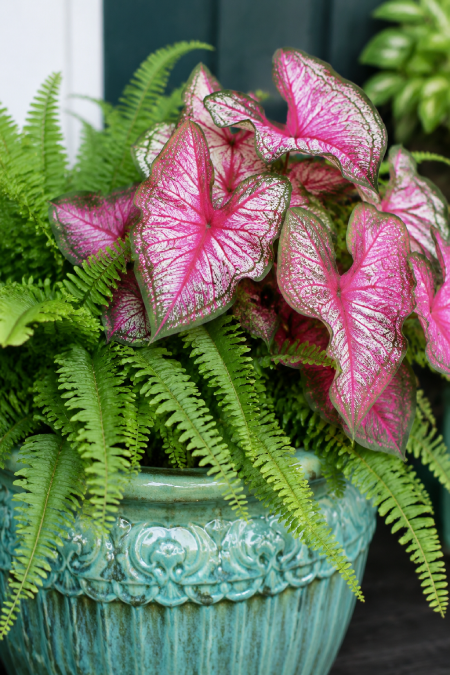
If you want color without relying on flowers, combining ferns with caladiums introduces beautiful foliage colors — reds, pinks, and whites — that contrast gorgeously with deep green fern fronds. Both plants thrive in similar shade conditions, making them genuinely easy to maintain together.
This combination works beautifully in decorative containers on porches or patios where you want something visually interesting but still low-maintenance and cohesive.
🛤️ 10. Line a Walkway With Fern Planters
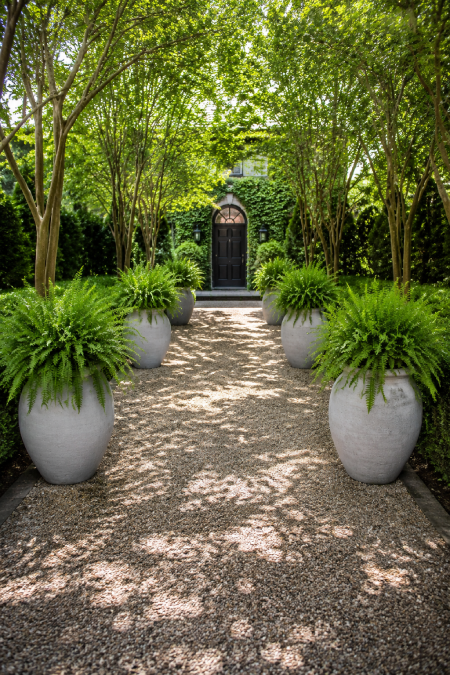
Placing matching fern planters along a walkway guides the eye naturally while making the entire space feel more structured and intentional. Repeating the same plant creates visual consistency that ties different areas together beautifully.
Use identical pots for a clean formal look or vary them slightly for something more relaxed and collected-feeling. This setup works perfectly for front entrances, garden paths, or side walkways where you want greenery that frames the journey.
⚫ 11. Use Metal Planters for a Modern Style
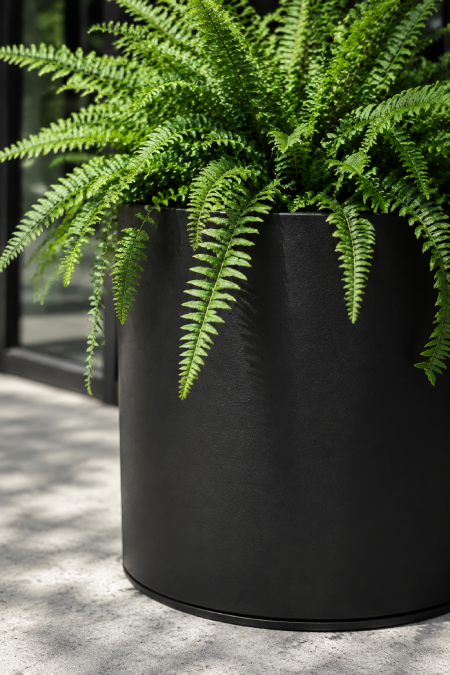
Metal planters offer clean contrast to the soft texture of ferns and create a contemporary aesthetic. Finishes like matte black, brushed steel, or dark grey help achieve a modern minimal look that feels intentional and designed.
This combination works beautifully in contemporary patios or indoor spaces where you want structure and clean lines. The smooth planter surface keeps the arrangement from looking too traditional or cottage-like.
🌸 12. Combine Ferns With Begonias for Depth
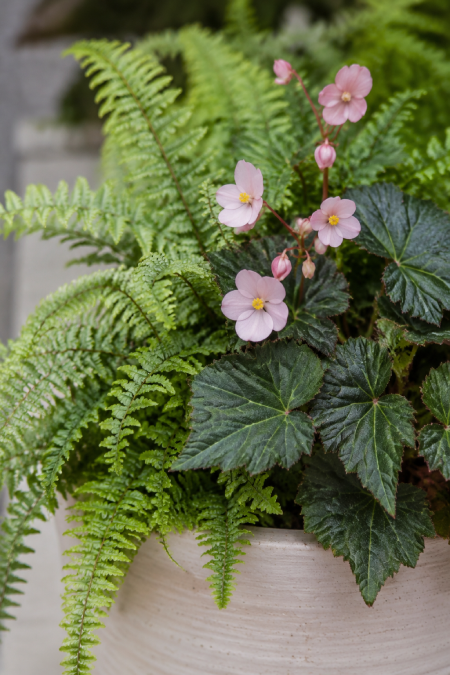
Begonias add thicker, more structured leaf shapes and delicate blooms that create visual interest when combined with feathery fern fronds. This creates a genuinely layered look that feels full without becoming overcrowded or chaotic.
Both plants thrive in shade conditions, making them genuinely easy to maintain together. This combination is perfect for shade potted plants where you want variation and depth without complexity.
🪟 13. Use Window Boxes With Ferns
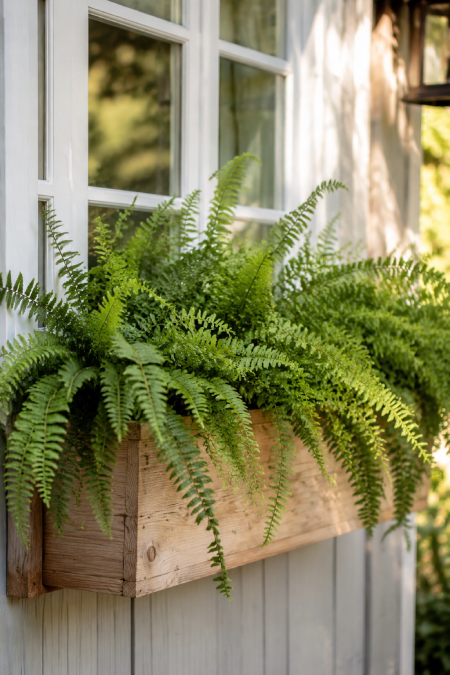
Filling window boxes with ferns adds greenery at eye level and creates a naturally finished appearance for your home’s exterior. The plants soften window edges and frame the opening beautifully whether viewed from inside or outside.
Keep it simple with just ferns or introduce trailing plants for extra detail and movement. This works for both indoor and outdoor views and is one of the easiest ways to extend your fern garden vertically without consuming additional ground space.
🌿 14. Mix Different Fern Varieties
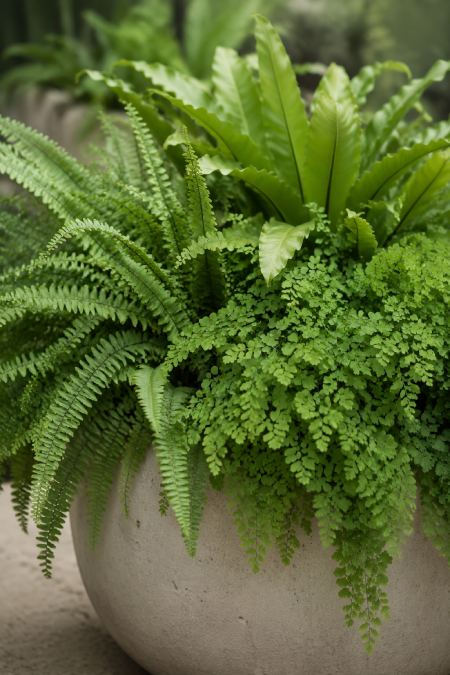
Using multiple fern types in a single planter creates rich texture and visual interest without introducing new colors. Combine Boston ferns with maidenhair, bird’s nest, or Kimberly queen ferns for variation in leaf shape and size.
This keeps the arrangement visually interesting while feeling completely cohesive because everything reads as soft green foliage. It is one of the easiest fern planter ideas to implement because it requires no additional plant types.
⚪ 15. Use Neutral Pots for a Minimal Look
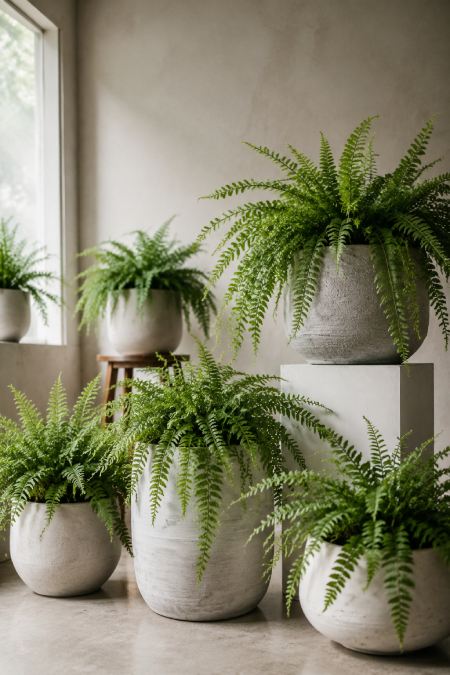
Neutral pots in shades like white, beige, or soft grey keep focus on the greenery rather than the container itself. This creates a clean, consistent appearance that works in both modern outdoor spaces and minimalist indoor settings.
Using neutral containers also makes it far easier to combine multiple planters without visual clashing. If you prefer a simple, uncluttered aesthetic, neutral pots are genuinely the most reliable choice.
🏢 16. Add Ferns to a Balcony Setup
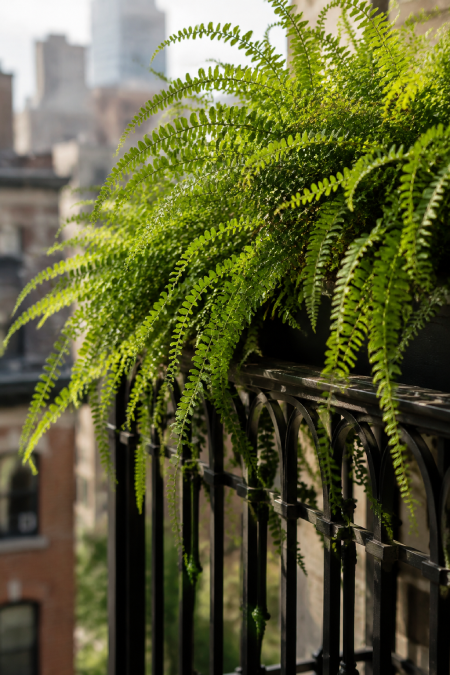
Ferns are well-suited for balconies, especially those with partial shade or dappled light. Use compact pots or railing planters to maximize space without overcrowding the area.
They soften hard edges like metal railings and concrete walls, making the space feel more comfortable and inviting. This is especially ideal for urban settings where creating a small manageable fern garden in limited space is genuinely valuable.
🎨 17. Use Decorative Ceramic Pots
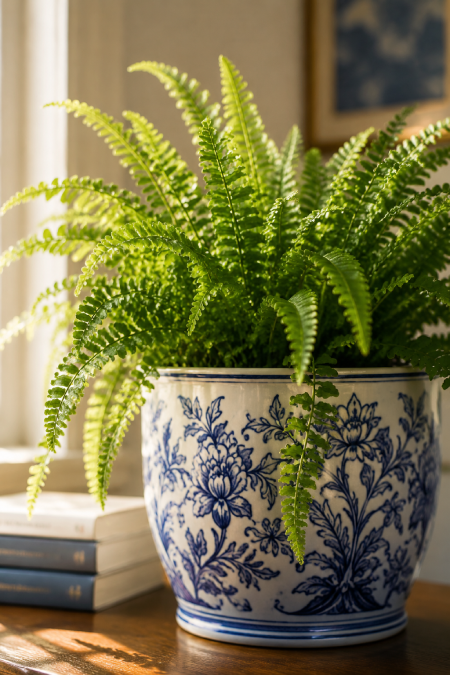
Decorative ceramic pots add visual interest and personality without changing the plant arrangement at all. Patterns, textures, or subtle colors can tie your plants into the rest of your decor beautifully.
This approach works especially well if your space feels too plain or lacks personality. Keep the color palette consistent so the setup feels cohesive rather than chaotic or overly decorated.
🍽️ 18. Create a Table Centerpiece With Ferns
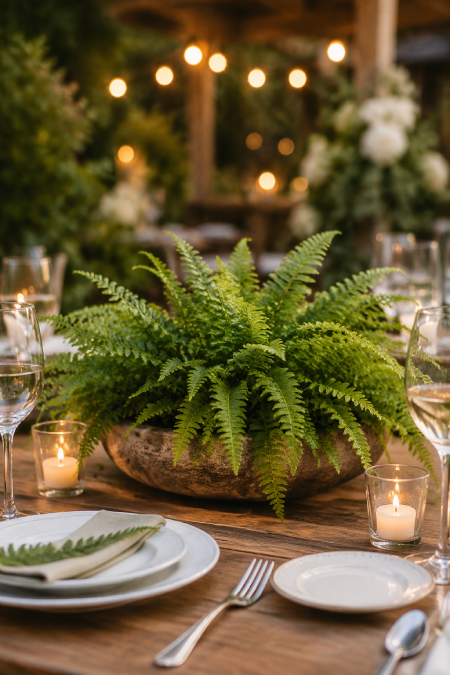
A low fern planter works beautifully as an outdoor patio table centerpiece because the height remains manageable and does not block views across the table. This adds natural greenery to outdoor dining areas while keeping the setup genuinely practical.
It is perfect for creating an atmosphere that feels garden-like and peaceful while maintaining sight lines for conversation. The soft green is calming without being visually demanding.
🎯 19. Use Tall Planters for Entryways
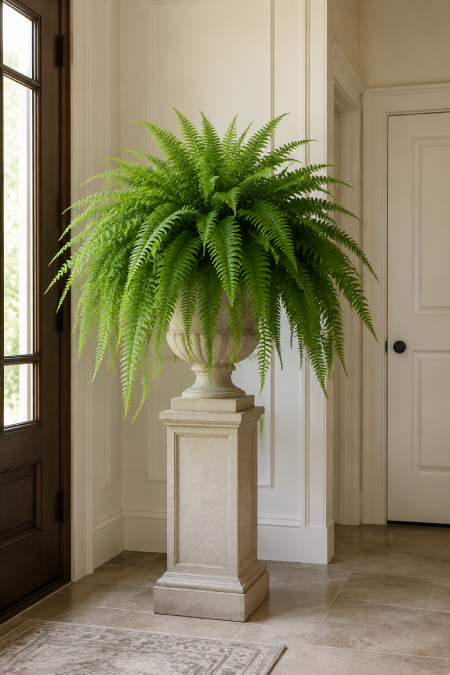
Tall fern planters in entryways help elevate greenery and make it more visible and impactful. The added height provides vertical structure and helps balance larger spaces that feel empty at ground level.
This works beautifully when paired with traditional entry setups or placed along pathways. The height commands attention naturally while the soft fern fronds remain welcoming and approachable.
🚿 20. Place Ferns in Bathrooms
Bathrooms provide the humidity that ferns thrive in, making them genuinely easy to maintain in this environment. Place them near a window with indirect light or on a shelf where they receive consistent moisture from shower steam.
Ferns soften the hard surfaces of tile and fixtures while adding a natural element that makes the space feel more spa-like and peaceful. This is one of the easiest and most effective indoor placements for low-maintenance ferns.
🛠️ Quick Practical Guide
Best fern varieties for beginners:
- Boston fern — most forgiving, lush fronds, adapts to various light
- Kimberly queen fern — more compact, similar to Boston but bushier
- Maidenhair fern — delicate looking but surprisingly hardy
- Bird’s nest fern — architectural shape, different texture
- Asparagus fern — wispy texture, slightly different appearance
Best fern container materials:
- Ceramic — warm aesthetic, good moisture retention
- Terracotta — natural look, breathable
- Concrete — modern aesthetic, cool tones
- Wood — rustic look, natural warmth
- Metal — contemporary feel, clean lines
- Woven baskets — natural, perfect for hanging
Best locations for fern planters:
- Front porch — semi-shade, entry impact
- Balconies — partial shade, space-saving
- Bathrooms — humidity-rich, easy maintenance
- Window boxes — eye level, framing effect
- Entryways — architectural, welcoming
- Shaded corners — peaceful, retreat feeling
- Near pathways — linear interest, structure
Companion plants that work with ferns:
- Shade lovers — impatiens, begonias, caladiums
- Texture contrast — ornamental grasses, sedge
- Foliage color — coleus, caladiums, heuchera
- Trailing plants — ivy, pothos, trailing sedums
- Flowering — petunias, impatiens, begonias
Fern planter care basics:
- Water — keep soil consistently moist but not waterlogged
- Light — prefer indirect, filtered, or dappled shade
- Humidity — mist regularly or place near bathroom
- Feeding — fertilize monthly during growing season
- Pruning — remove brown or yellowing fronds gently
- Repotting — every 1-2 years in spring for best growth
Seasonal fern planter guide:
- Spring — repot, fertilize, prune winter damage
- Summer — maintain consistent moisture, watch for dry heat
- Fall — reduce watering slightly, prepare for winter dormancy
- Winter — water less frequently, reduce fertilizer, protect from cold
Common fern planter mistakes to avoid:
- Overwatering — leads to root rot, most common fern problem
- Too much direct sun — causes fronds to brown and dry
- Dry air — ferns prefer humidity, misting helps
- Cold drafts — keep away from AC vents and doors
- Poor drainage — ensures water drains through pot